

As an Amazon Associate, this website earns from qualifying purchases.
Transforming your living room into a harmonious blend of Japanese minimalism and Scandinavian warmth requires a thoughtful approach to design. By embracing neutral color palettes and integrating natural materials, you can achieve a serene and cozy atmosphere. Prioritizing functional furniture and clean lines will enhance the space’s simplicity. The key lies in introducing nature-inspired elements and maximizing light, while adding thoughtful decorative accents to maintain balance. Curious about the details? Let’s explore further.
1. Embrace Neutral Color Palettes

Neutral color palettes are the cornerstone of blending Japanese minimalism with Scandinavian warmth, creating spaces that feel both calming and inviting. In your Japandi living room design, choose soft whites, muted grays, and earthy tones to set the stage for tranquility. These hues act as a serene backdrop, allowing you to effortlessly incorporate minimalist elements while maintaining a sense of coziness.
Focus on subtle contrasts; think of pairing a creamy sofa with a soft gray rug or a light wooden coffee table. This delicate balance between cool and warm tones will harmonize your space. Don’t shy away from incorporating varying textures within this neutral spectrum—linen, cotton, and wool can add depth without overwhelming the visual simplicity that defines Japandi style.
2. Incorporate Natural Materials

Drawing inspiration from the natural world, incorporating natural materials into your Japandi space not only enhances its aesthetic but also brings a touch of authenticity and warmth. Embrace the elegance of wood—think oak or walnut—as they embody both Japanese minimalism and Scandinavian coziness.
Opt for a wooden coffee table or open shelving that showcases the grains and textures, adding depth to your Japandi living room.
Consider adding woven textiles, like a jute rug, to soften the space and create a tactile experience. Stone accents, such as a marble vase or slate coasters, introduce subtle sophistication.
Don’t forget the greenery; a simple bonsai or a lush fiddle leaf fig can breathe life into the room, harmoniously blending nature with serene design.
3. Prioritize Functional Furniture

When crafting your Japandi space, prioritize furniture that’s not only stylish but also highly functional. In a Japandi style living room, choose pieces that serve multiple purposes, blending sleek Japanese minimalism with cozy Scandinavian functionality. Opt for a sofa that doubles as a bed or a coffee table with hidden storage. Remember, every piece should contribute to the room’s serenity and practicality.
| Furniture Piece | Functionality Feature |
|---|---|
| Sofa | Converts to a bed |
| Coffee Table | Hidden storage |
| Bookshelf | Room divider option |
| Dining Table | Extendable leaves |
| Ottoman | Built-in storage |
These dual-purpose pieces not only save space but also highlight the seamless blend of form and function inherent in Japandi design.
4. Highlight Clean Lines and Simple Forms

To truly embrace the essence of Japandi design, focus on highlighting clean lines and simple forms. In your living room, opt for furniture pieces that boast sleek, unembellished silhouettes. Think Scandinavian sofas with low profiles and Japanese-inspired coffee tables with smooth, flat surfaces. This approach emphasizes harmony and balance, vital elements in Japandi interiors. Choose a neutral color palette, incorporating whites, soft grays, and natural wood tones to maintain visual simplicity and coherence.
Avoid clutter by selecting multipurpose furnishings that blend seamlessly into the environment. Open shelving with minimalistic decor can also enhance the sense of space and order. By accentuating clean lines and simple forms, you not only cultivate a serene atmosphere but also create a timeless living room that exudes understated elegance.
5. Introduce Nature-Inspired Elements

While celebrating the beauty of clean lines and simple forms, don’t overlook the power of nature-inspired elements to infuse warmth and liveliness into your Japandi space. Embrace the wabi sabi living room philosophy by incorporating organic textures and materials. Consider adding a reclaimed wood coffee table or raw-edged shelves to introduce earthy tones. Lush greenery, like a fiddle leaf fig or a small bonsai, can soften the minimalist aesthetic while connecting your space to nature.
Textures play a key role; think linen throws, wool rugs, and cotton cushions for a cozy, lived-in feel. These elements reflect both Japanese reverence for imperfections and Scandinavian comfort. Select ceramics with subtle, handcrafted details to enhance your decor, creating a harmonious balance between minimalism and warmth.
6. Maximize Light and Space

Harnessing the interplay of light and space is essential to achieving a Japandi aesthetic, where simplicity meets coziness. To maximize these elements, start by embracing natural light. Opt for sheer curtains or blinds that diffuse sunlight, creating a soft, inviting glow throughout your Japandi living room. Position your furniture to enhance openness; a low-profile sofa and sleek coffee table can make the space feel expansive.
Consider wall-mounted solutions for your TV, freeing up floor space and maintaining a minimalist look. Light, neutral colors on walls and floors, like soft whites or pale woods, can amplify the sense of spaciousness. Mirrors strategically placed can bounce light and visually expand the room. Embrace this balance for a serene, uncluttered haven.
7. Add Thoughtful Decorative Accents
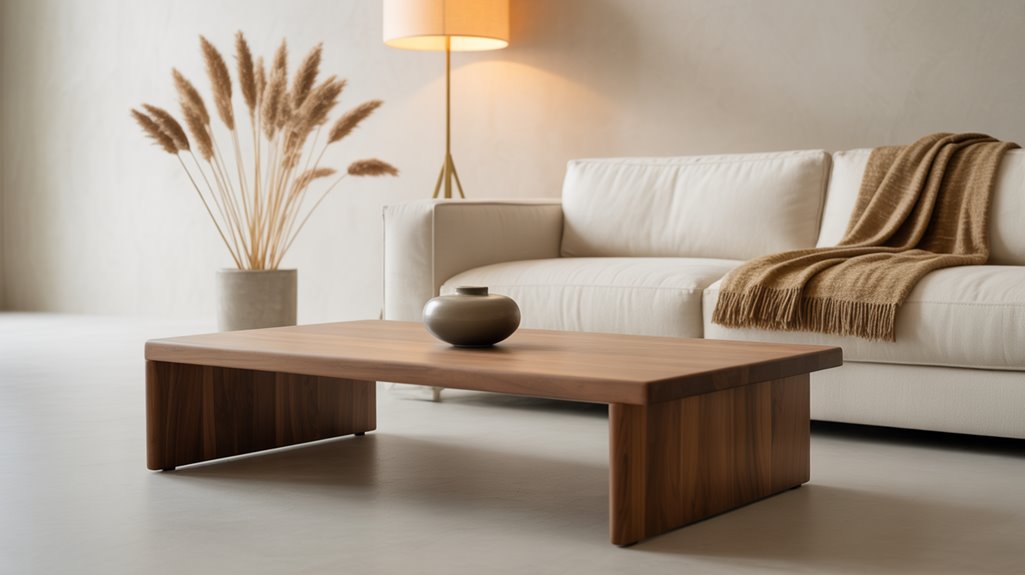
After creating a bright and spacious foundation, infuse your space with thoughtful decorative accents that capture the essence of Japandi style. Choose items that blend the clean lines of Japanese living room decor with the cozy textures of Scandinavian design. Consider adding handcrafted ceramics and textured textiles in neutral tones. These elements add warmth without overwhelming the minimalist aesthetic.
Incorporate natural materials like wood and stone, which echo the serene simplicity central to both cultures. A statement piece, such as a low-profile sofa with soft throws, can anchor the room. For a pop of color, introduce greenery through bonsai or simple potted plants. These accents foster a tranquil yet inviting ambiance, seamlessly integrating the Japanese living room’s minimalist elegance with Scandinavian coziness.