

| IRONCK Wood Armoire Wardrobe Closet with Mirror |
| Best Overall | Finish: White | Storage: Hanging rail, shelving and one bottom drawer | Features: Built-in mirror and soft-close doors | View at IRONCK | Read Our Analysis |
| Steel Armoire Wardrobe Closet with Hanging Rod |
| Most Durable | Height: 71″ | Material: Thickened cold-rolled steel | Number of Drawers: 2 drawers | View at GAIOUS | Read Our Analysis |
| Garvee Arched Pantry Cabinet with Two Drawers PHO_33FMY79S |
| Best For Kitchen | Dimensions: 71.65 H × 29.92 W × 15.83 D inches | Storage: Glass-fronted cabinets and two drawers | Shelf capacity: Up to 50 pounds per shelf | View at Garvee | Read Our Analysis |
| VOWNER Armoire Wardrobe Closet with Drawers and Mirror |
| Best With Mirror | Height: 71″ | Material: Engineered wood | Number of Drawers: 3 large drawers | View at VOWNER | Read Our Analysis |
| VOWNER ELARA 31.5-Inch Mirrored Armoire Wardrobe |
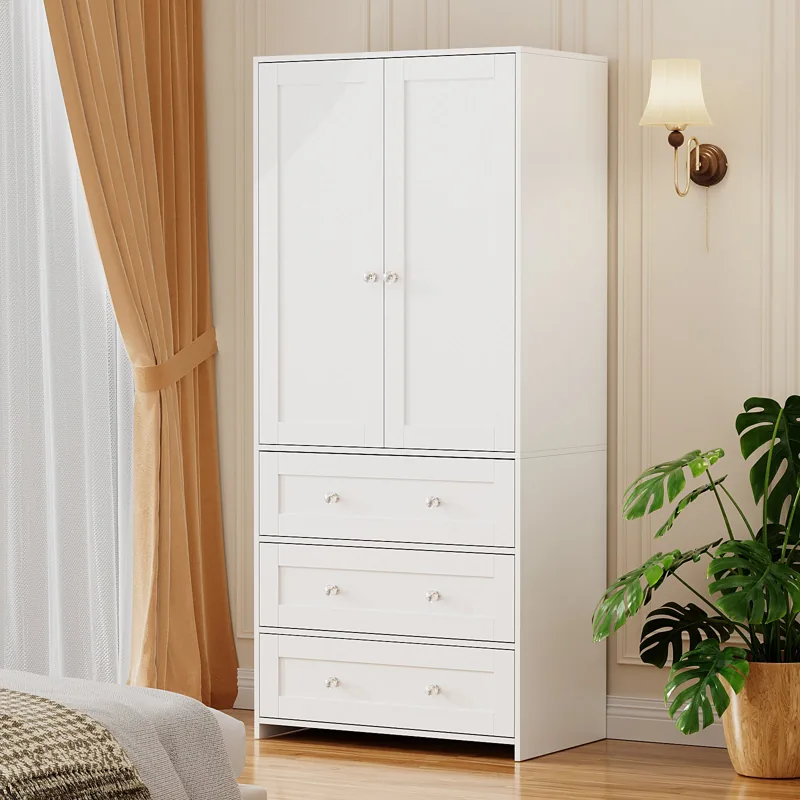
| Budget-Friendly Pick | Dimensions: 31.5 W × 18.9 D × 71 H inches | Storage: Hanging rod and three drawers | Finish: White with exterior mirror | View at VOWNER | Read Our Analysis |
| SICOTAS Savanna Rattan Wardrobe with Two Drawers in Black Oak |
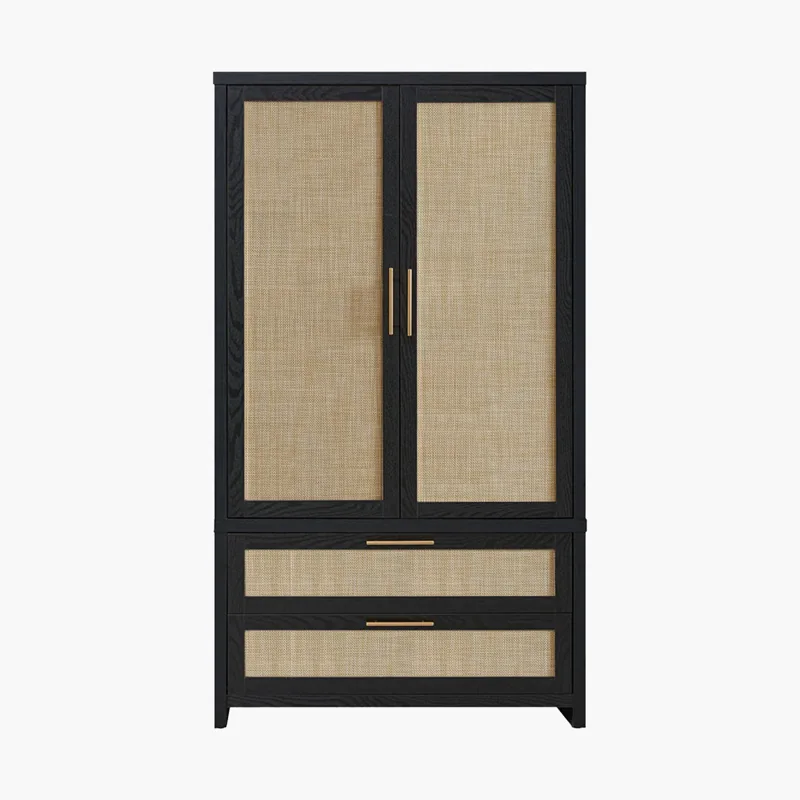
| Best Farmhouse Style | Finish: Black oak with rattan door panels | Dimensions: 70.86 H × 40 W × 20.98 D inches | Drawers: Two with safety stops | View at SICOTAS | Read Our Analysis |
| Garvee 65-Inch Louvered Armoire Wardrobe in Black |
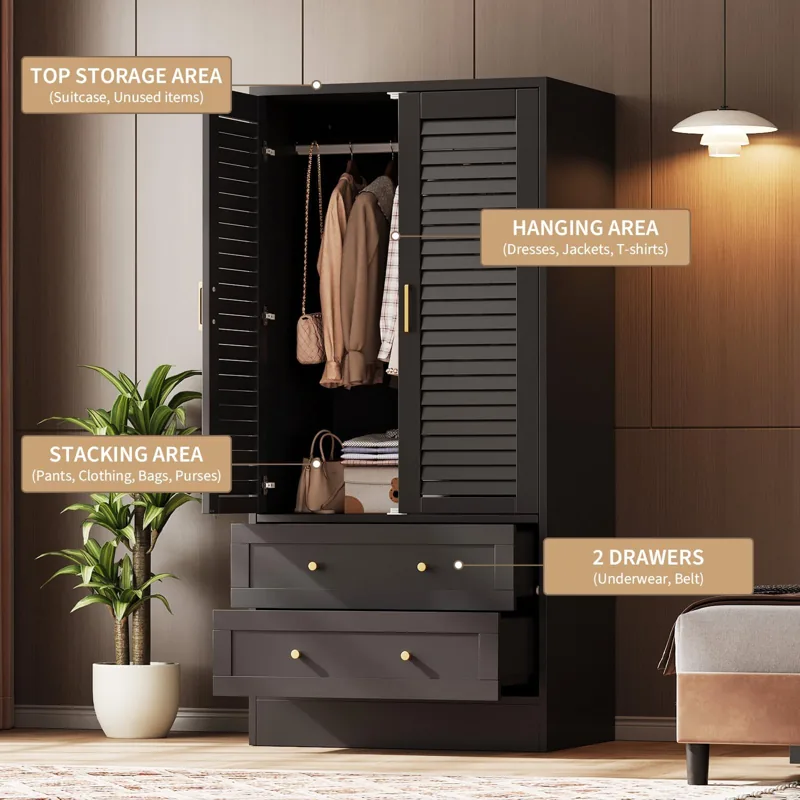
| Best Modular Design | Dimensions: 31.5 W × 21.65 D × 64.96 H inches | Storage: Hanging rod and two drawers | Finish: Black with louvered doors | View at Garvee | Read Our Analysis |
More Details on Our Top Picks
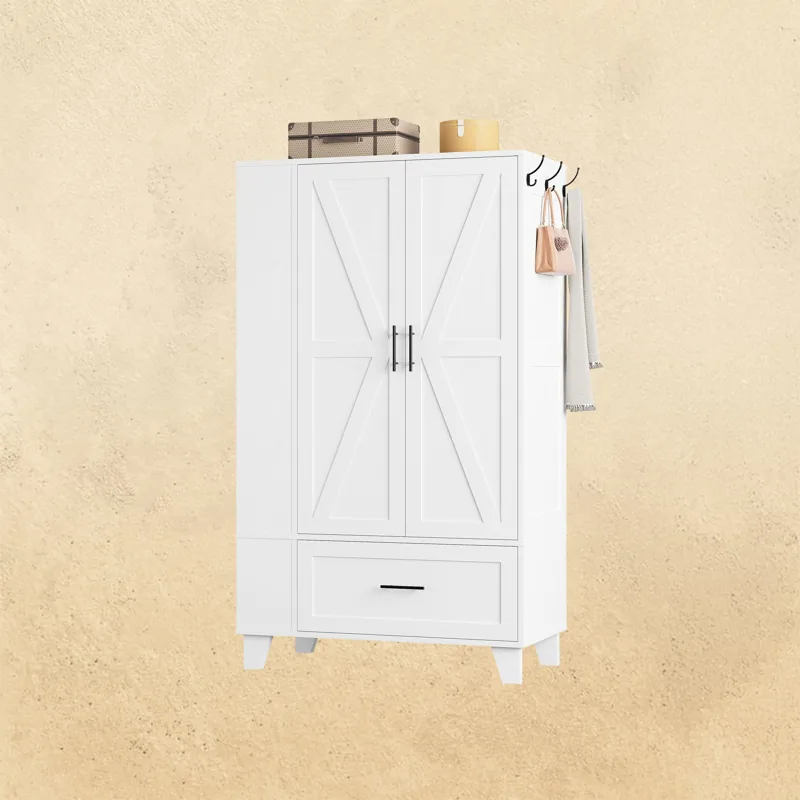
IRONCK Wood Armoire Wardrobe Closet with Mirror
This white IRONCK wardrobe combines hanging space, shelving and a bottom drawer in a freestanding bedroom cabinet. A metal clothes rail separates garments that need to hang from folded clothing, while hooks provide places for frequently used accessories. The built-in mirror makes it useful in a dressing area, and the painted doors suit a light bedroom scheme. Soft-close hinges reduce the abrupt closing of the doors. The maker supplies labeled components and assembly instructions in one package, along with an anti-tip restraint that should be fitted as directed.
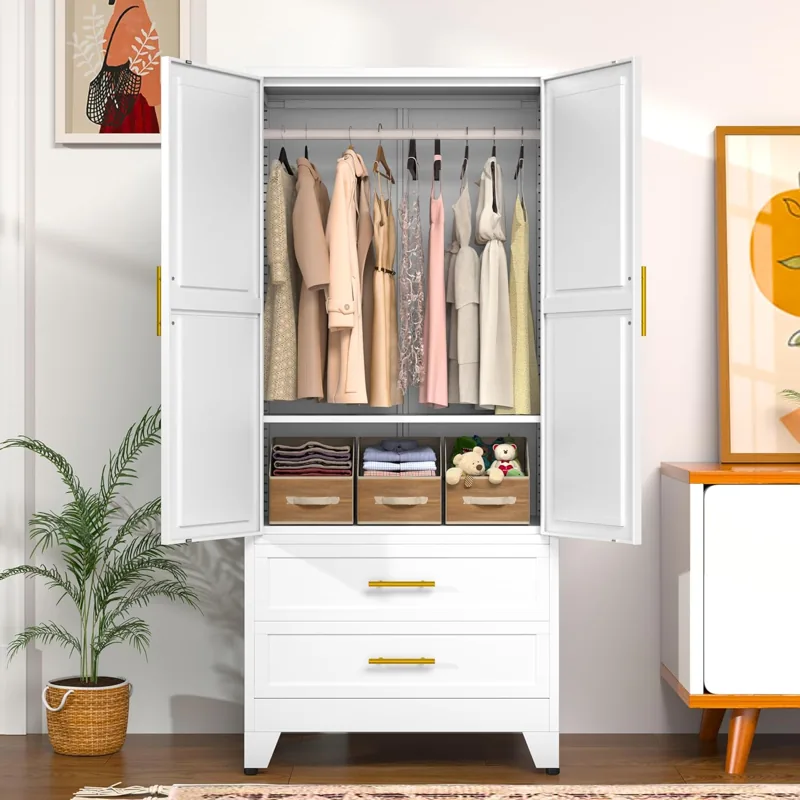
Steel Armoire Wardrobe Closet with Hanging Rod
Looking for industrial-strength storage that won’t buckle under pressure? This GAIOUS steel armoire handles 180 pounds per shelf while standing 71 inches tall. You’ll get thickened cold-rolled steel with electrostatic powder coating that resists scratches and rust.
The compartmentalized design gives you hanging space for suits, an adjustable shelf for bulky items, and two drawers for accessories. Magnetic doors snap shut securely, while adjustable feet keep everything level. You can mount it to your wall using pre-drilled holes for added stability in bedrooms, garages, or warehouses.
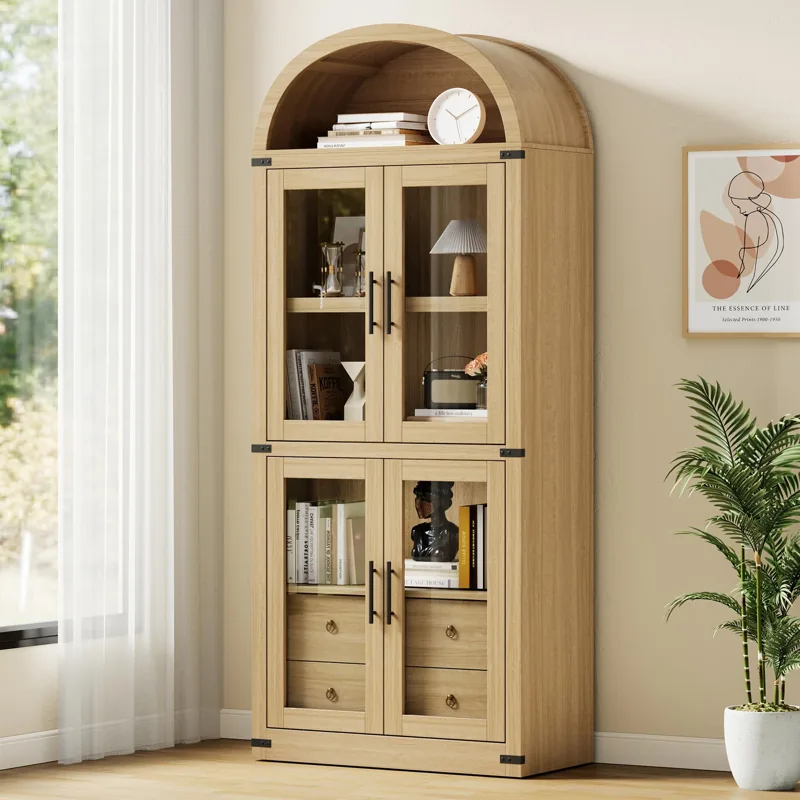
Garvee Arched Pantry Cabinet with Two Drawers PHO_33FMY79S
The Garvee arched pantry combines glass-fronted storage with two lower drawers for kitchen and dining-room organization. Its natural wood finish and arched top give dishes and glassware a display space, while the drawers keep utensils and table linens out of sight. The maker lists an MDF structure, metal corner protection and a shelf load limit of 50 pounds. At approximately 71.65 inches high, 29.92 inches wide and 15.83 inches deep, it offers vertical storage without the footprint of a full kitchen dresser. Assembly is required; use the supplied anti-tip straps according to the instructions.
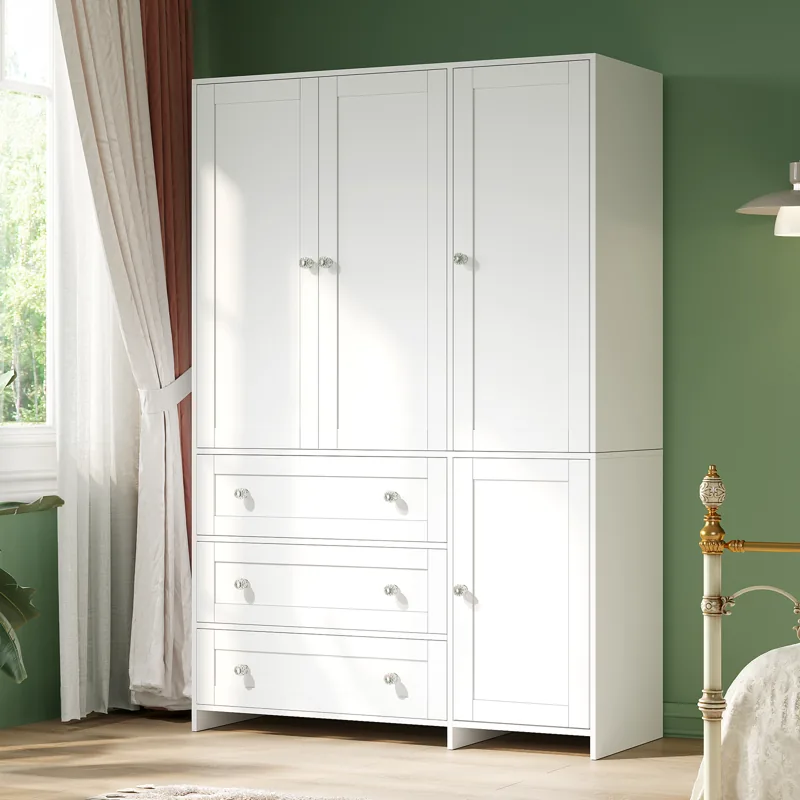
VOWNER Armoire Wardrobe Closet with Drawers and Mirror
Spacious storage meets functional elegance with the VOWNER Armoire Wardrobe Closet, making it ideal for anyone who needs thorough bedroom organization without sacrificing style. This 71-inch white armoire features four doors, three large drawers, and a hanging rod that accommodates dresses, suits, and pants effortlessly. The built-in mirror with crystal knobs provides full-body viewing while adding sophisticated charm to your space. Measuring 47.3W x 18.9D x 71H inches, it’s constructed from sturdy engineered wood and includes cushioned hinges for quiet operation. An anti-tip device ensures safety, and labeled components simplify assembly. You’ll appreciate its versatility beyond bedrooms—use it in living rooms, offices, or basements for secure storage.
VOWNER ELARA 31.5-Inch Mirrored Armoire Wardrobe
The narrower VOWNER ELARA provides mirrored wardrobe storage in a 31.5-inch-wide white cabinet. A hanging rod holds clothing above three lower drawers, giving folded items and accessories their own compartments. Its tall mirror supports dressing without requiring a separate floor mirror, while the white finish and decorative handles work with light bedroom furniture. The maker lists dimensions of 31.5 inches wide, 18.9 inches deep and 71 inches high. Check the space needed to open the doors and drawers before assembly, and install the supplied anti-tip restraint as directed.
SICOTAS Savanna Rattan Wardrobe with Two Drawers in Black Oak
The SICOTAS Savanna combines woven-look rattan door panels with a black oak frame for a strong farmhouse or bohemian accent. Two lower drawers keep folded clothing and accessories separate from the upper wardrobe space. The maker lists an engineered-wood structure and dimensions of 70.86 inches high, 40 inches wide and 20.98 inches deep, so allow for its depth as well as door clearance when planning a bedroom. Its drawer stops help control normal opening, and the cabinet requires assembly. Wipe the finish with a dry or slightly damp cloth following the maker’s care instructions.
Garvee 65-Inch Louvered Armoire Wardrobe in Black
This black Garvee wardrobe combines a hanging section with two lower drawers in a compact freestanding cabinet. Louvered door fronts add texture, magnetic closures keep the doors shut during everyday use, and the hanging rod provides a separate place for garments that crease when folded. The maker lists dimensions of 31.5 inches wide, 21.65 inches deep and 64.96 inches high. Additional cabinets can be arranged independently as room space allows; each needs its own clearance and installation according to the instructions. The drawers are useful for smaller folded items, while the upper compartment keeps hanging clothing together.
Factors to Consider When Choosing Armoires
Before you invest in an armoire, you’ll need to evaluate several key features that’ll determine whether it meets your needs. Consider how the size, construction quality, and storage layout align with your available space and organizational requirements. Pay attention to door styles, weight limits, and materials to ensure you’re choosing a piece that’s both functional and durable for years to come.
Size and Dimensions
How do you determine if an armoire will actually fit in your bedroom and meet your storage needs? Start by measuring your available floor space against the unit’s height, width, and depth—typical armoires stand 70–71 inches tall, 31–33 inches wide, and 17–33 inches deep. Don’t forget door clearance when measuring.
Check the weight rating too. Models ranging from 102–168 pounds need sturdy flooring and may require anchoring to prevent tipping. Look for wall-mount or anti-tip features if you’re placing the armoire against a wall.
Finally, examine the interior layout. Measure the hanging rod length and count shelves and drawers to ensure they’ll accommodate your clothing and accessories. Balance capacity with your room’s footprint—a 71-inch unit with 31-inch width offers optimal storage without overwhelming smaller spaces.
Material and Construction
Once you’ve confirmed the armoire fits your space, you’ll need to evaluate what it’s actually made of—because materials determine how well it’ll hold up over years of daily use.
Engineered wood (MDF) offers affordability but adds weight, while thickened cold-rolled steel provides superior durability at a higher price point. Rattan or wood veneers introduce visual texture and warmth, though they demand careful maintenance to avoid warping or surface damage.
Construction details matter equally. Check for anti-tipping designs and wall-mount back holes—these features drastically reduce tipping risk in taller units. Examine drawer and shelf construction closely: thicker panels, solid joinery, and greater quantities directly impact load capacity and longevity.
Finally, consider finishes. Painted, lacquered, or powder-coated surfaces each offer different levels of scratch resistance, moisture tolerance, and cleaning ease.
Storage Configuration Options
What you store inside matters just as much as the armoire itself—and smart configuration choices prevent you from wrestling with cramped shelves or inaccessible corners. Evaluate hanging rods, shelves, drawers, and cabinets based on your wardrobe needs. Adjustable shelves and removable rods let you reconfigure space for bulkier items like winter coats or luggage. Count the drawers—more means better discrete storage for accessories and undergarments, while open shelves provide quick access to frequently worn pieces.
Double-door models typically offer wider compartments for hanging clothes, whereas single-door and multi-compartment designs help you divide garments, shoes, and belongings into organized zones. Don’t overlook backing features: wall-mounting options or anti-tip hardware ensure stability, especially if you’re stacking heavier items or placing the armoire in high-traffic areas.
Door Style and Design
After organizing what goes inside your armoire, you’ll need to decide how you’ll access it—and that’s where door style becomes a practical design choice.
Louvered doors feature slatted panels that promote airflow and create a casual aesthetic, while solid doors deliver a uniform, formal appearance with superior light-blocking capabilities. Mirror-integrated doors add functionality by providing a full-body reflection, eliminating the need for separate wall-mounted mirrors and maximizing your floor space.
Glass or decorative panels showcase items stored inside and introduce visual interest, though they’ll require frequent cleaning to maintain clarity. Consider door configuration too—two-door versus four-door setups affect your access workflow and interior organization.
For tall armoires, prioritize safety with anti-tip hardware or wall-mount options that ensure stability.
Weight Capacity Limits
How much weight can your armoire realistically handle before shelves bow or structural integrity fails? You’ll find steel armoires often support around 180 pounds per shelf, while wood models vary significantly based on construction quality. Total weight capacity determines how much clothing the entire unit can hold when fully loaded, so don’t overlook this specification.
Adjustable shelves typically offer different weight limits depending on their support reinforcement and positioning. Hanging rods require careful assessment too—both the rod material and mounting hardware determine whether they’ll support long, heavy garments without sagging.
Consider anti-tip features and back-wall mounting options, as these affect load distribution and stability. Proper anchoring prevents dangerous tipping when you’ve loaded upper compartments with heavier items.
Assembly Requirements
Before you commit to an armoire, check whether you’re comfortable with its assembly demands—some models snap together in 30 minutes, while others require two people and several hours of focused work. Review the instructions beforehand to identify required tools and assess complexity. Look for designs with labeled boards and color-coded screws, which streamline the process substantially.
Consider whether you’re choosing a freestanding or wall-mounted unit, as the latter needs additional hardware and backing for proper stability. Pay attention to anti-tip hardware requirements—many armoires specify back-wall mounting to prevent accidents during use. If you’re not handy with tools, opt for simpler one-box setups that don’t demand extensive carpentry skills or extra hands to complete safely.
Safety and Stability Features
Once your armoire stands assembled, its stability becomes your primary concern—particularly if you have children or pets in the home. Prioritize models with anti-tip hardware and wall-mount options, especially for tall units that could topple when loaded. Look for back-wall holes or mounting provisions that let you secure the armoire directly to studs, dramatically reducing tipping risks.
Adjustable feet or leveling legs prove essential for uneven floors, preventing wobble that compromises stability. Examine the frame construction—reinforced top and bottom panels with sturdy materials like thick engineered wood or steel ensure the unit safely supports heavy loads without sagging.
Don’t overlook door hardware: soft-close hinges, magnetic catches, and cushioned closures prevent accidental slams that could cause injuries or damage.
Versatility and Placement
Where you position your armoire determines not just its functionality but how effectively it serves multiple storage needs throughout your home. Consider room function first—whether you’re placing it in your bedroom, living room, or office—then measure available floor space carefully. You’ll want models with removable hanging rods and adjustable shelves that adapt to changing storage requirements, letting you switch from wardrobe use to auxiliary media or file storage.
Deeper models with multiple compartments keep dresses, suits, and folded items organized while reducing clutter. Multi-purpose designs combining hanging space, drawers, and shelves accommodate everything from clothing to towels and tools. The ability to reconfigure interior layouts ensures you can store items of varying heights. Always install wall-mounting brackets or anti-tip hardware for stability and safety.
Frequently Asked Questions
How Do I Prevent My Armoire From Tipping Over?
You’ll need to anchor your armoire to the wall using anti-tip brackets or furniture straps. Secure them to wall studs, not just drywall. Keep heavier items on lower shelves and avoid overloading drawers.
What’s the Best Way to Remove Odors From an Old Armoire?
Like banishing unwelcome guests, you’ll eliminate armoire odors by placing baking soda bowls inside overnight. You can also wipe surfaces with white vinegar, air it outdoors, or use activated charcoal packets for stubborn smells.
Can Armoires Be Used in Small Apartments or Studio Spaces?
Yes, you’ll find armoires perfect for small apartments since they maximize vertical storage space. Choose slim, multi-functional designs with mirrors to create illusion of depth. They’ll replace bulky dressers while keeping your belongings organized and hidden.
How Often Should I Clean and Maintain My Armoire?
Like a faithful companion, you’ll want to dust your armoire weekly and deep clean it monthly. You should polish wood surfaces quarterly, check hinges semi-annually, and reorganize contents seasonally to keep it functioning beautifully for years.
Are Armoires Difficult to Move When Relocating to a New Home?
Yes, armoires are difficult to move because they’re heavy and bulky. You’ll need to disassemble them when possible, remove doors and shelves, and hire professional movers or recruit several helpers to transport them safely without damage.