

Our current leafy-greens juicer picks include Kuvings AUTO 10 Plus for large batches, Ninja NeverClog JC151, TUUMIIST 580 and Godspeeds MP802Q. Breville Juice Fountain Plus provides a faster centrifugal option, while ECOSELF, Omega Effortless JC2022, Omega Time Saving OMJCSMVB, Nama J2 and Hurom H70 offer different cold-press layouts. Compare hopper size, preparation needs, counter clearance and cleanup before choosing.
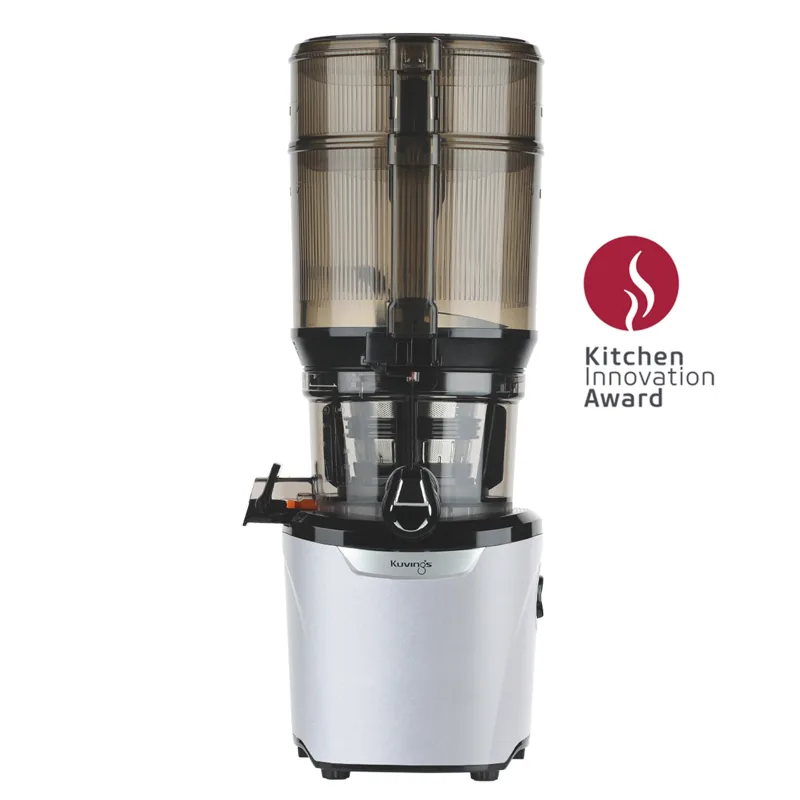
Kuvings AUTO10 Plus Hands-Free Slow Juicer
The Kuvings AUTO10 Plus suits large batches, with a hopper extension that brings capacity to 135 ounces. Its slow-juicing mechanism runs at 60 RPM, and the US model uses a 110–120V motor. Along with fruit and vegetable juice, the supplied sorbet and smoothie strainers give it uses beyond everyday green juice. Its tall hopper needs clearance under kitchen cabinets, so measure the 20.25-inch height with the extension fitted. Load ingredients according to the maker’s guidance, and stay nearby while it operates.
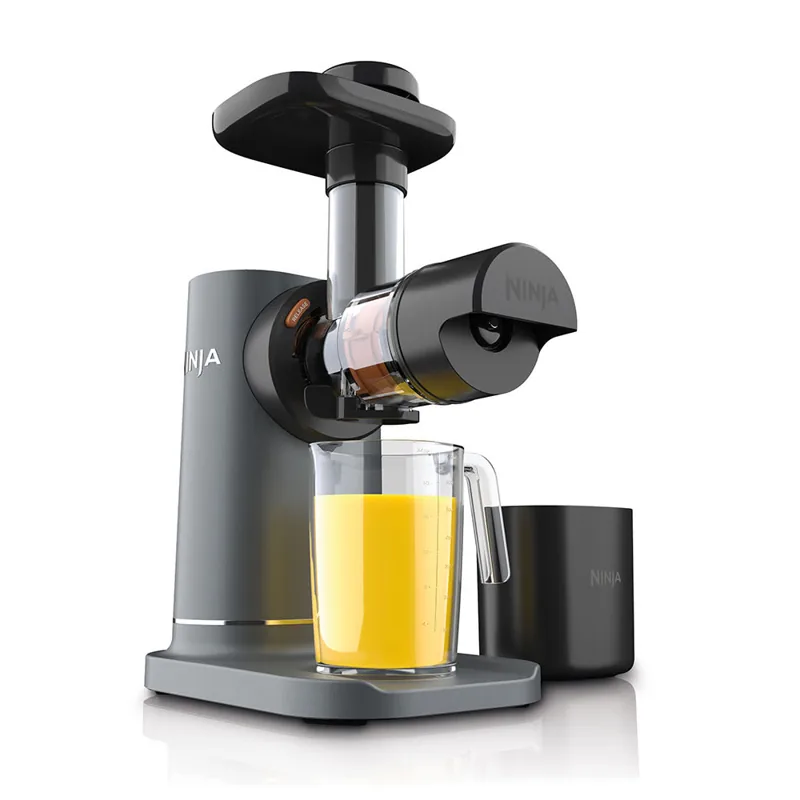
Ninja NeverClog Cold Press Juicer (JC151)
Is the Ninja NeverClog Cold Press Juicer (JC151) your go-to choice for leafy greens? This sleek, charcoal-finished machine offers a powerful yet gentle way to extract nutrients from tough ingredients like kale, spinach, or celery. Its unique cold press design, combined with a high-torque auger, minimizes clogging and foam, ensuring you get smooth, nutrient-rich juice.
With two pulp filters, you can customize your drink’s texture—whether you prefer lots of pulp or a smoother sip. Easy to assemble, clean, and store, it’s perfect for everyday use, especially in small kitchens. Plus, the included recipe guide adds a fun twist to your juicing adventures.
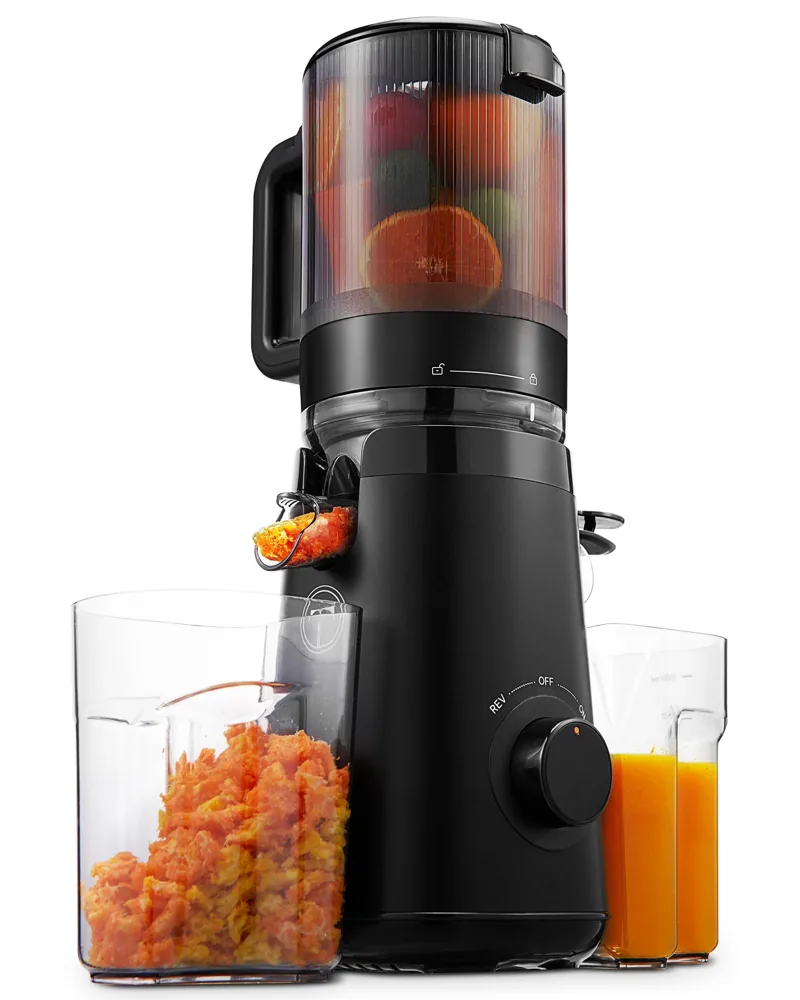
TUUMIIST 580 5.8-Inch Whole-Fruit Cold Press Juicer
The TUUMIIST580 has a 5.8-inch feed chute for larger pieces of fruit and vegetables. A 300W motor turns the auger at 55 RPM for slow pressing. Removable food-contact parts and the included cleaning brush make routine disassembly and rinsing straightforward. The larger opening can reduce chopping, but prepare fibrous greens and hard ingredients as directed in the manual. It is a simple daily-juicing option for households that want a wide chute without a separate touchscreen interface.
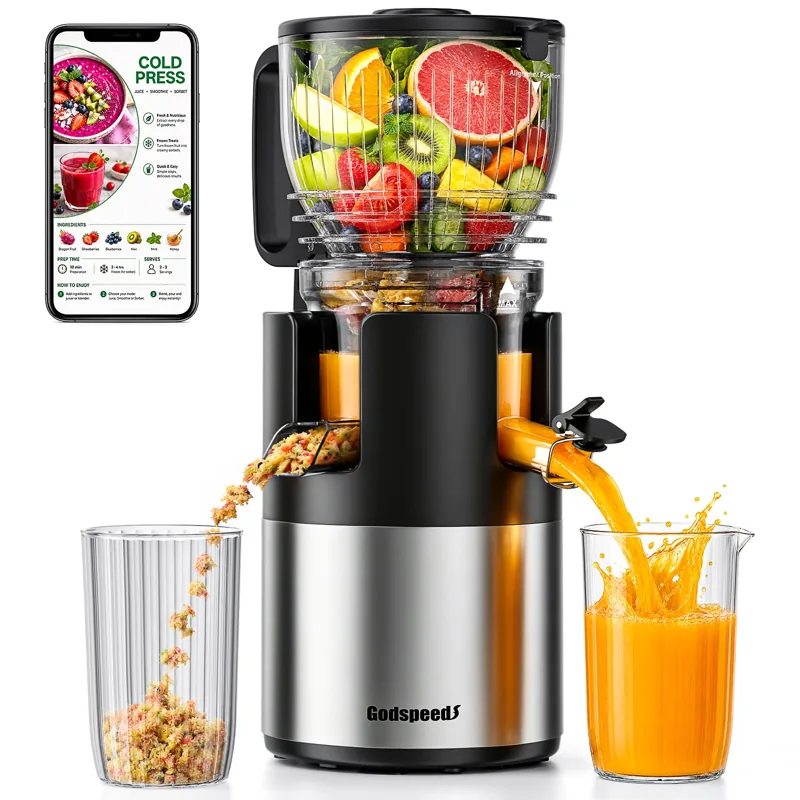
Godspeed Cold Press Juicer with Large Feed Chute
Could the Godspeed Cold Press Juicer be the perfect choice for busy households seeking effortless daily greens? Its large 5.8-inch feed chute allows whole fruits and vegetables to be processed directly, saving time and reducing prep work.
With a 300W motor and slow masticating technology, it gently extracts juice while preserving flavor and nutrients—ideal for leafy greens and soft produce alike. Designed for convenience, it’s easy to assemble, clean, and store, making daily juicing simple.
Whether making a quick green smoothie or a family-sized batch, this juicer offers high juice yield with minimal waste, fitting seamlessly into a busy lifestyle.
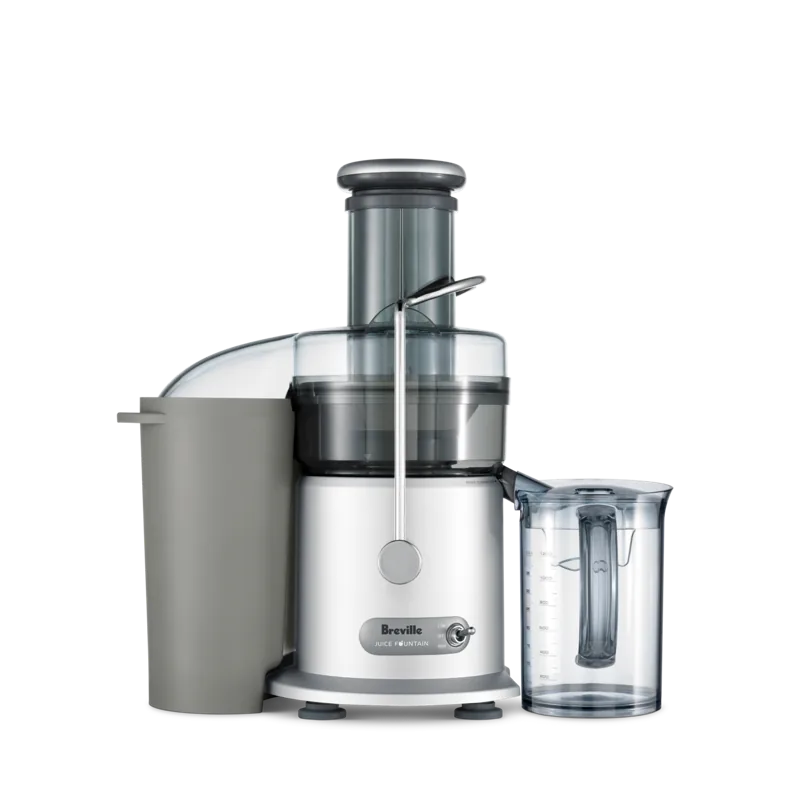
Breville Juice Fountain Plus
The Breville Juice Fountain Plus suits readers who value quick preparation and centrifugal extraction. Its three-inch feed chute accepts larger pieces of produce, and two electronic speed settings let you choose a lower speed for softer ingredients or a higher speed for harder produce. The juice jug includes a froth separator, while a stainless-steel mesh basket separates the juice from pulp. This is a two-speed centrifugal machine, so it has a different extraction method from the slow juicers elsewhere in the list. Allow time to rinse the filter basket after use.
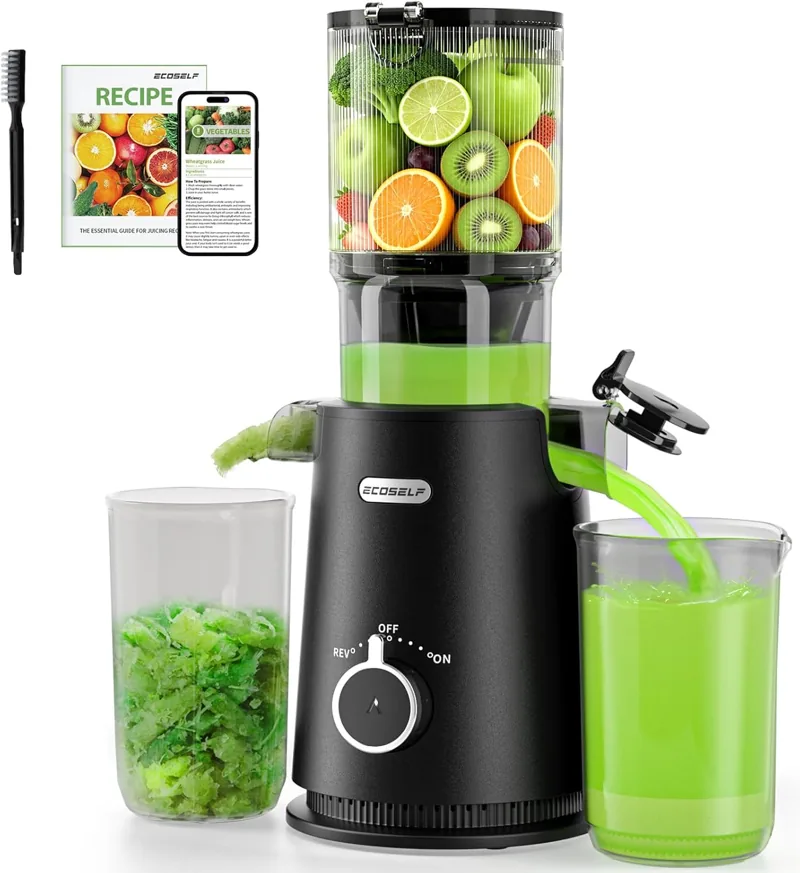
ECOSELF Cold Press Juicer with Wide Mouth
Is ease of use a top priority for those looking to juice leafy greens regularly? The ECOSELF Cold Press Juicer with Wide Mouth is designed with that in mind. Its large hopper and wide feed chute let you toss in whole fruits and veggies, saving time and effort. Plus, the auto-feeding feature means less hands-on work—just press start, and it does the rest.
The slow masticating, cold-press technology keeps nutrients intact and produces smooth juice. With simple one-touch controls, a reverse function for smooth operation, and easy assembly, this juicer is perfect for busy households. Its compact design fits neatly anywhere, making healthy juicing quick and convenient.
Omega Effortless Batch Juicer JC2022
The Omega Effortless JC2022 combines a batch hopper with slow cold-press extraction. Its two-liter hopper holds ingredients for slow cold-press extraction, and the all-in-one auger works without a separate juicing screen. The 150W motor uses pressure detection to switch between forward and reverse when needed, and the maker lists nut milks and frozen desserts among its additional uses. Fewer separate parts help with assembly and cleanup. Check counter and cabinet space before choosing this vertical machine, and prepare ingredients according to the manual.
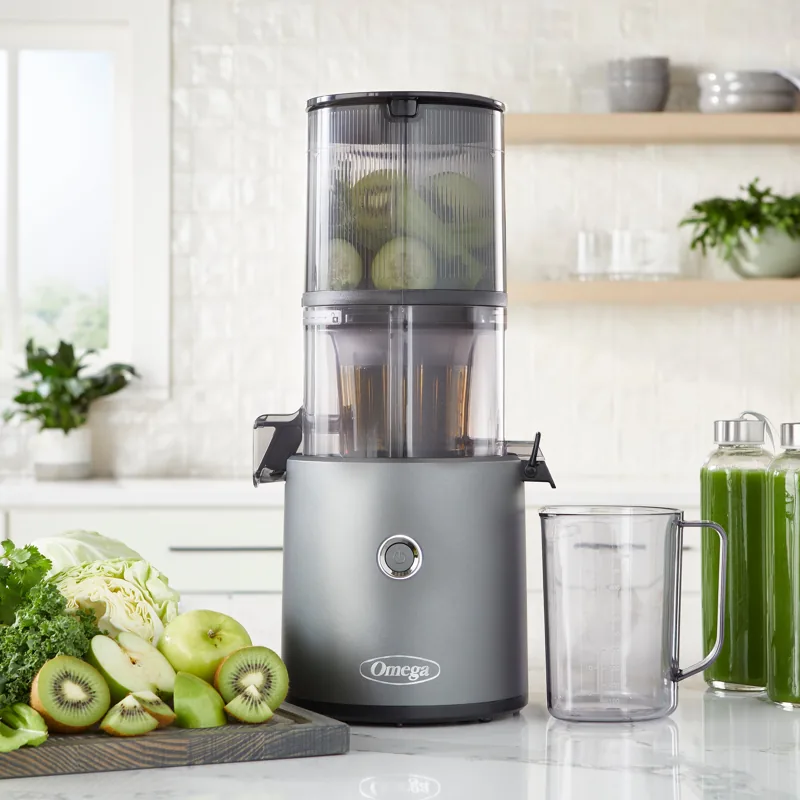
Omega Time Saving Cold Press Batch Juicer OMJCSMVB
The Omega Time Saving OMJCSMVB suits a regular family-juicing routine without taking up a large amount of counter space. Its batch hopper lets you load a recipe together, and the high-torque mechanism presses fruit, vegetables and leafy greens at low speed. A no-mesh filter reduces the amount of fine-screen scrubbing after a batch. The supplied juice container, pulp container and pusher support everyday use without needing a separate collection set. It suits a regular countertop routine, while ingredient preparation and cleanup still matter for fibrous greens.
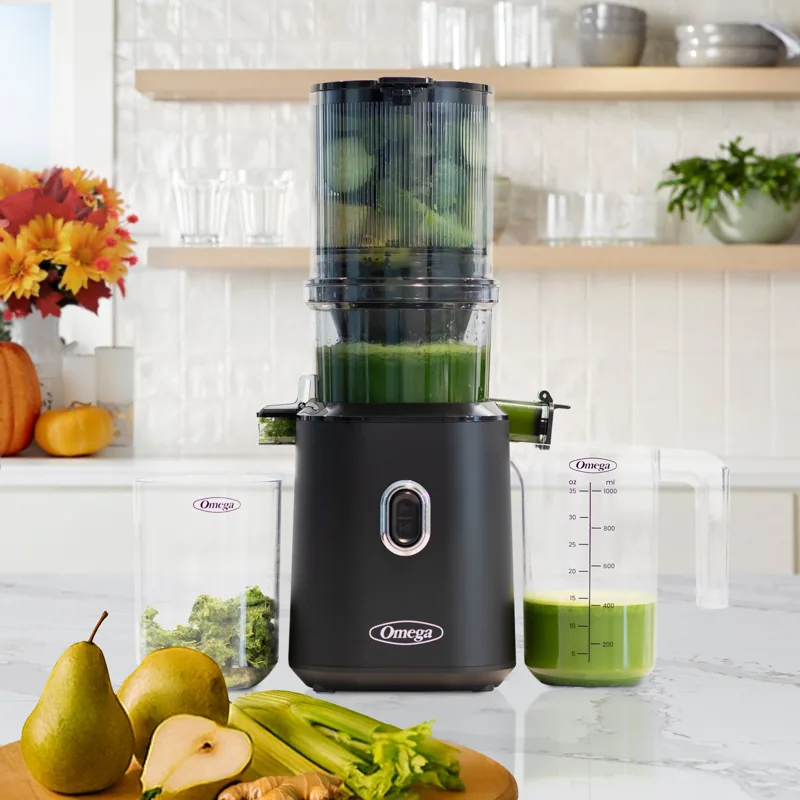
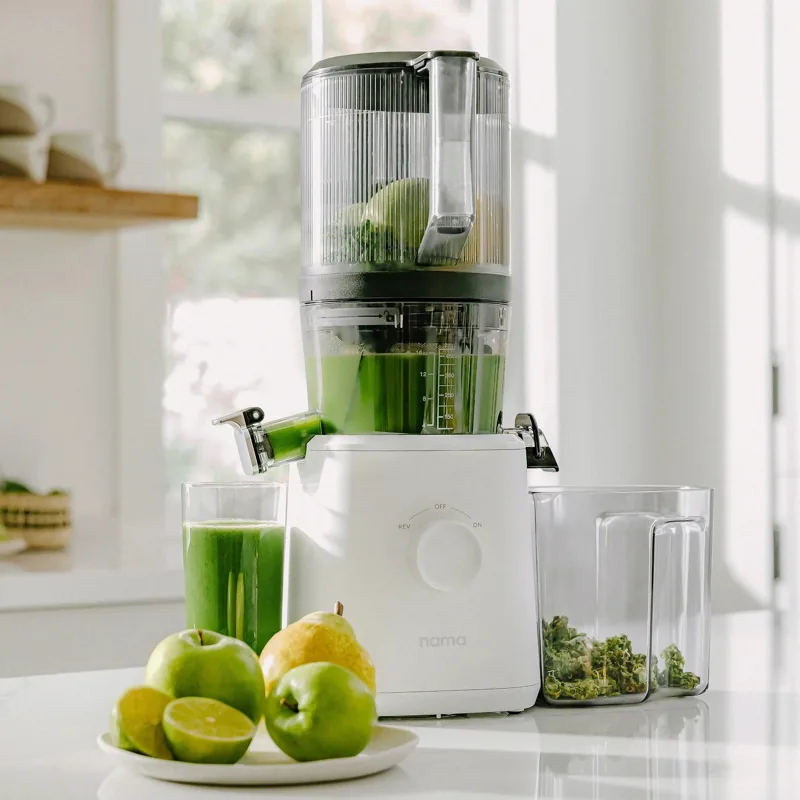
Nama J2 Cold Press Juicer with Wide Mouth Hopper
The Nama J2 Cold Press Juicer stands out for its ultra-convenient wide mouth hopper, making it ideal for anyone who wants to save time and effort when juicing leafy greens. Its self-feeding design allows users to load whole ingredients at once, so there’s less chopping and more juicing.
Operating at a gentle 50 RPM with a powerful 200 W motor, it extracts maximum juice while reducing pulp waste. Easy to assemble and clean, it includes all necessary parts like strainers and a cleaning brush. Perfect for smoothies, sauces, or juice, this juicer combines efficiency with simplicity, making leafy green juicing hassle-free and enjoyable.
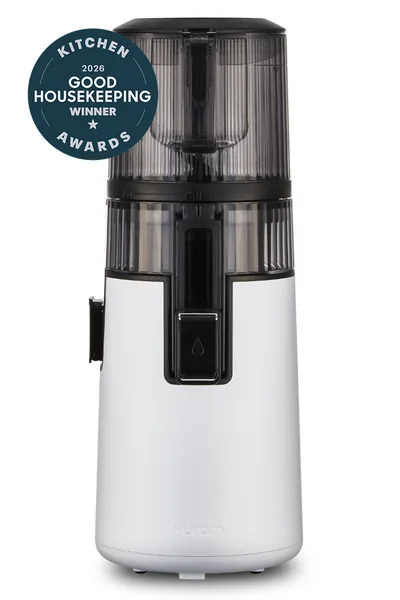
Hurom H70 Easy Clean Slow Juicer
The HuromH70 combines a self-feeding hopper with an Easy Clean chamber for regular home juicing. Its self-feeding hopper accepts a batch of prepared produce, while the Easy Clean chamber uses a two-part auger instead of a conventional fine-mesh strainer. The chamber and auger pieces separate for rinsing, and a front window lets you see the juice level. Its 150W motor runs quietly for regular kitchen use. It is worth comparing the full counter height and the effort of washing each removable part with your daily routine.
Factors to Consider When Choosing Juicers for Leafy Greens
When choosing a juicer for leafy greens, it’s important to contemplate how it processes your produce, such as the type of juicing mechanism it uses, whether it’s a centrifugal or masticating system. Features that help preserve nutrients, like slow pressing or cold-press technology, can make a big difference in the quality of your juice.
Additionally, factors like how easy it is to clean, control pulp levels, and maximize juice yield all play a role in finding the right fit for your healthy habits.
Juicing Mechanism Type
Ever wonder why some juicers seem better suited for leafy greens than others? It mostly comes down to the juicing mechanism. Slow-masticating, or cold-press, juicers operate at low speeds, around 50 to 60 RPM, reducing heat and oxidation, which helps preserve nutrients. Their auger design crushes greens gently, extracting more juice and nutrients, often resulting in richer, fiber-filled drinks.
Juicers with large feed chutes make prepping easier by letting whole leaves tumble in without chopping. Interchangeable pulp filters give users control over pulp levels, affecting texture and fiber retention. Plus, self-feeding models keep the process smooth and continuous, saving effort. The motor power and auger design also influence juice yield, with slower systems typically producing higher-quality, nutrient-dense juice—ideal for leafy greens.
Nutrient Preservation Features
Have you ever wondered what makes some juicers better at preserving the nutrients in leafy greens? It mainly comes down to features that protect those delicate nutrients during juicing. Slow-speed, cold-press (masticating) juicers operating around 50–60 RPM help keep more nutrients intact by reducing heat and oxidation, two factors that can degrade vitamins. Using BPA-free, food-safe materials prevents chemical transfer, ensuring the juice stays pure and nutrient-rich. Wide or extra-wide feed chutes cut down prep time and limit bruising. This helps maintain nutrient levels.
Additionally, juicers with dual or interchangeable strainers allow users to select less-pulp or more-pulp textures, optimizing nutrient retention. Lastly, systems designed to minimize foaming and clogging reduce oxidation and nutrient loss, keeping leafy greens’ goodness locked inside the juice.
Ease of Cleaning
Cleaning a juicer after processing leafy greens can sometimes feel like a chore, but choosing the right model can make this task much easier. Look for juicers with dishwasher-safe detachable parts, which allow for quick cleanup without scrubbing. A wide feed chute helps reduce prep time and minimizes pulp buildup, making post-juicing cleanup smoother. Slow-masticating, or cold press, models tend to produce less foam and pulp, simplifying separation and rinsing.
Some juicers feature built-in brush tools or easy-access pulp filters, saving time between batches. Additionally, machines with reverse functions or anti-clog features can prevent leafy greens from jamming the mechanism, reducing cleaning headaches. Overall, selecting a model designed for easy disassembly and maintenance makes the process much more manageable and less tedious.
Pulp Control Options
When choosing a juicer for leafy greens, considering pulp control options is essential because they directly influence the texture and quality of your green juices. Some juicers come with filters that let you choose less pulp for a smoother drink or more pulp for a thicker consistency. Others feature large pulp containers, like 36 ounces, to handle lengthy juicing sessions without constant emptying.
Features like a reverse function and anti-drip lever help prevent jams and messy spills, especially with fibrous greens. Slow-speed, high-torque, or NeverClog designs are great because they reduce foam and clogging, resulting in better pulp texture. Additionally, adjustable settings or interchangeable filters allow users to personalize their juice’s pulp level, making it easier to craft the perfect green beverage every time.
Juice Yield Efficiency
Ever wondered why some juicers seem to squeeze every drop out of leafy greens while others leave a bit behind? The secret lies in their juice yield efficiency. Slow-masticating (cold press) juicers excel here because they extract more juice by slowly crushing greens, reducing oxidation and foam. A wide feed chute and hands-free loading support continuous processing, meaning less prep and fewer jams—so you get more juice in less time.
High-torque augers work harder at low speeds, maximizing extraction while preserving juice quality. Adjustable pulp filters allow users to fine-tune texture, which can influence perceived yield. Additionally, stable, quiet operation prevents overheating and shutdowns, ensuring maximum output. All these factors combine to make some juicers notably better at squeezing every last drop from leafy greens.
Size and Capacity
Have you ever wondered how some juicers handle large amounts of leafy greens without slowing down or causing messes? It often comes down to size and capacity. Juicers with wide feed chutes—around 5.3 to 6.5 inches—allow for bulk greens to go in without pre-cutting, saving time and effort. Large juice jugs, like 24 ounces, and pulp containers, around 36 ounces, support longer juicing sessions, especially useful when making multiple servings.
Adjustable pulp filters let users control fiber content, which can affect capacity needs. Features like anti-clog or reverse functions help dislodge greens that might cause jams. These design elements ensure smooth operation during batch juicing, making the process less frustrating and more efficient for leafy green lovers.
Noise Level
Choosing a juicer for leafy greens often involves more than just how well it extracts juice; noise level is an important factor that many overlook. Slow-masticating juicers usually operate at lower RPMs, which helps cut down the noise compared to high-speed models. Some brands even design their juicers with quiet operation in mind, using brushless motors for smoother, quieter performance. These juicers often produce less foam and splashing, making the process calmer and cleaner.
Features like high-torque augers and tight seals can reduce vibrations and rattling, further lowering noise during operation. Additionally, models with under-cabinet or compact designs often include built-in housings that dampen sound, creating a more peaceful kitchen environment. All these elements make noise level a key consideration for anyone seeking a quiet juicing experience.
Safety and Durability
What should one look for to ensure a juicer remains safe and reliable over time? Safety features like overheat protection and safety locks are essential, especially since leafy greens often require longer juicing sessions. These prevent accidents if the lid or chute isn’t properly secured.
Durability is equally important. Look for BPA-free materials and corrosion-resistant parts that won’t degrade with frequent use. A slow-speed, cold-press design reduces heat buildup, helping preserve nutrients and extending motor life. A sturdy, wide feed chute minimizes jams and makes processing leafy greens easier, reducing internal wear.
Additionally, a reliable reverse or anti-clog function can prevent pulp buildup, which might strain the motor. Choosing a juicer with these features ensures safety, longevity, and consistent performance over time.
Frequently Asked Questions
How Do Juicers Retain Maximum Nutrient Content From Leafy Greens?
Juicers retain maximum nutrients from leafy greens by using slow, cold-pressing methods that minimize oxidation and heat. This preserves enzymes and vitamins, ensuring gentle extraction without nutrient loss.
This process effectively maintains the greens’ nutritional integrity by preventing damage to sensitive nutrients during juicing.
What Is the Best Cleaning Method for Leafy Green Juicers?
Cleaning leafy green juicers involves disassembling parts, rinsing immediately after use, using a brush and mild detergent. Avoid abrasive cleaners and ensure thorough drying to prevent bacterial growth and maintain optimal performance.
Can These Juicers Handle Other Vegetables and Fruits Efficiently?
Certainly, these juicers prove versatile, efficiently extracting juice from a variety of vegetables and fruits. Like a skilled conductor, they harmonize with different produce, ensuring maximum yield and nutrient preservation across diverse ingredients.
They are capable of handling various types of produce with ease. Whether dealing with leafy greens, hard vegetables, or soft fruits, these juicers maintain their performance and efficiency. This makes them an excellent choice for those who want a reliable appliance for a wide range of juicing needs.
How Long Do Cold Press Juicers Typically Last With Regular Use?
Cold press juicers generally last between 10 to 15 years with regular use, given proper maintenance and cleaning. Durability depends on the brand, frequency of use, and adherence to manufacturer guidelines for optimal performance and longevity.
Are There Any Safety Features to Prevent Overloading During Juicing?
Many juicers boast overloading safety features, such as auto shut-off or overload protection, turning the nightmare of burnt-out motors into a distant memory. An elegant solution for those who prefer their greens uncrushed by mechanical mayhem.