

| Simpson Strong-Tie WBSK Hardware Kit | 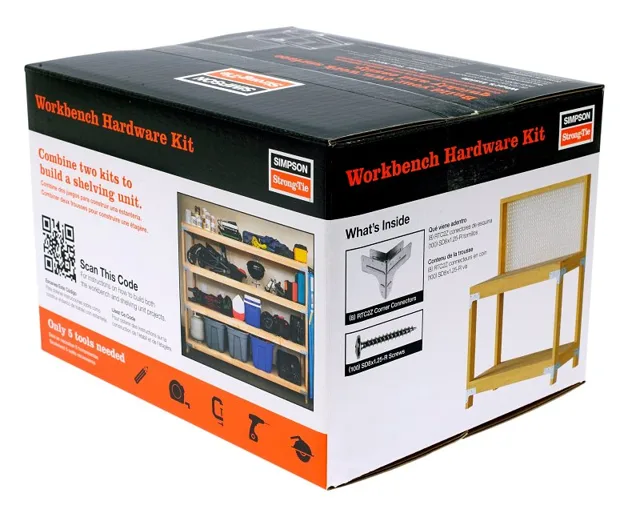 | Hardware Kit | Type: Workbench hardware kit | Lumber: Not included | Fittings: Connectors and screws | Check price | Read Our Analysis |
| Garvee 48" Workbench with Outlets | 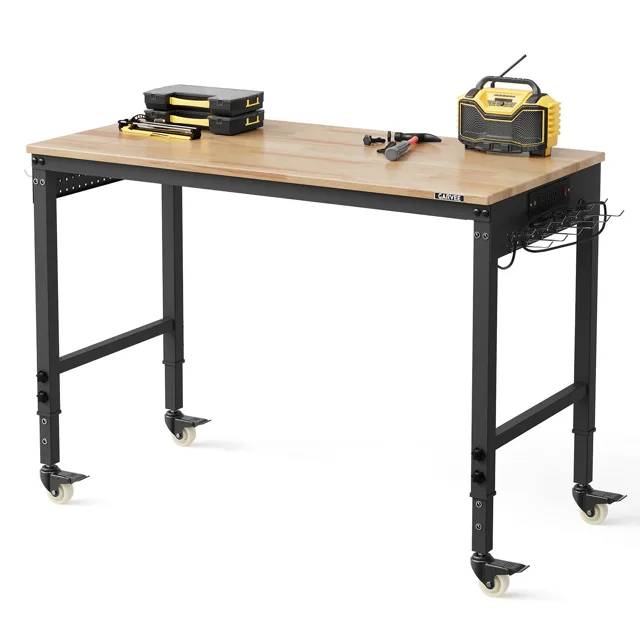 | Rubberwood Bench | Size: 48 x 24 in | Height: 28 to 39.5 in | Power: 4 AC, 2 USB | Check price | Read Our Analysis |
| Garvee 48x24 Adjustable Workbench | 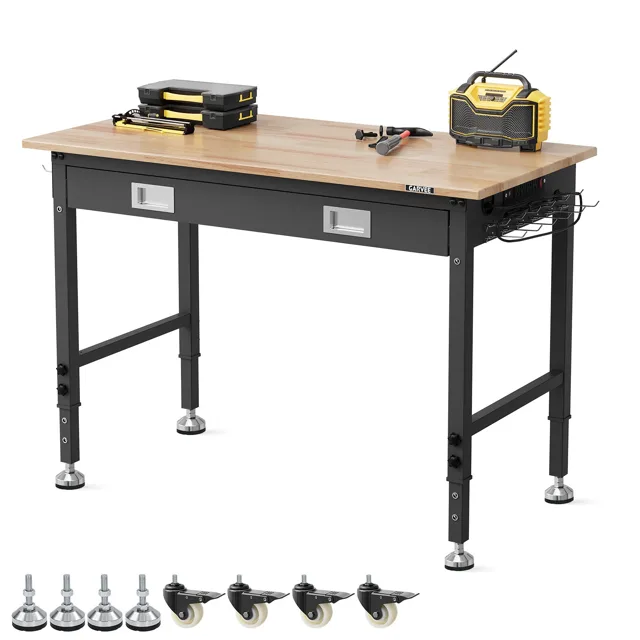 | Bench with Drawer | Size: 48 x 24 in | Load: 2,000 lb | Wheels: 4 lockable casters | Check price | Read Our Analysis |
| Garvee 60-Inch Workbench | 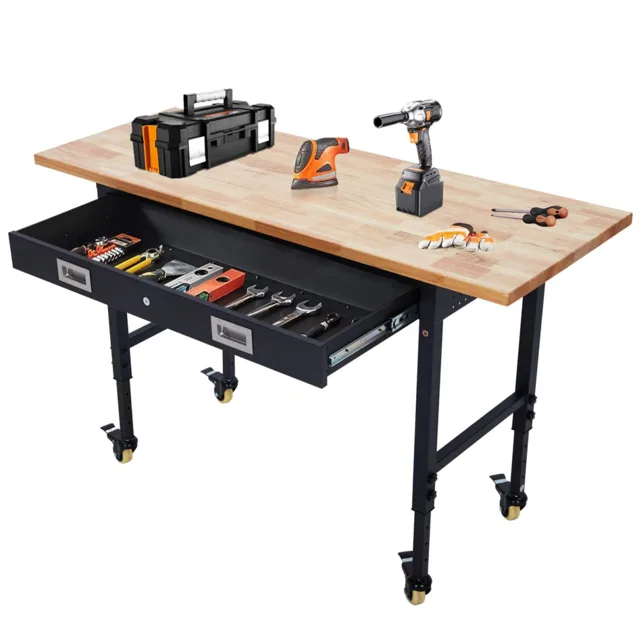 | 60-Inch Bench | Size: 60 x 22 in | Height: 31.6 to 39.5 in | Load: 2,000 lb | Check price | Read Our Analysis |
| Garvee Folding Work Stand | 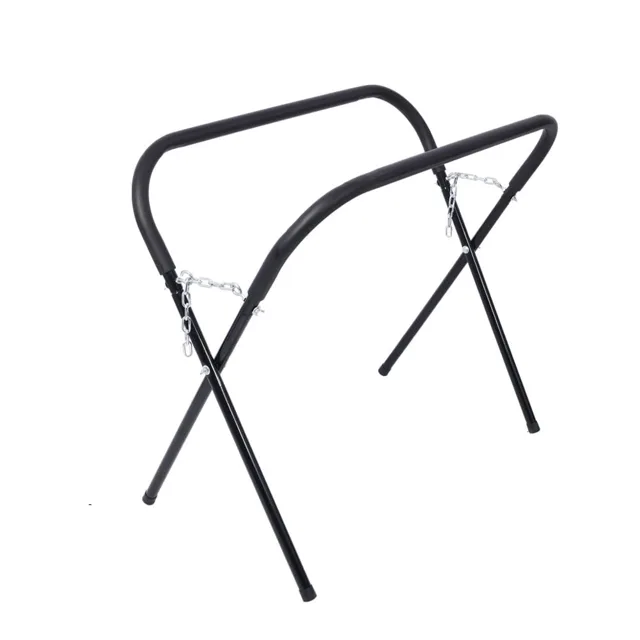 | Folding Stand | Type: Folding steel stand | Load: 750 lb | Storage: Folds flat | Check price | Read Our Analysis |
More Details on Our Top Picks
Simpson Strong-Tie WBSK Hardware Kit
The Simpson Strong-Tie WBSK is a hardware kit for building a workbench and shelves from lumber you supply. The box holds the galvanised steel connectors and screws that join the frame, so the bench goes together around boards cut to the length and width your shop allows. Lumber is not included, which is the same trade-off the other kits on this page make: you buy the wood and do the cutting, and the kit supplies the metalwork that holds it square.
A hardware kit suits a builder who wants a bench at an exact size rather than the size a manufacturer chose. It is the smallest buy on the list and leaves the top, the shelf and the finish to you, so the bench can match the rest of the shop. Work through the listing before you buy lumber, because the board sizes the connectors accept are what set the bench dimensions.
- Type:Workbench and shelving hardware kit
- Material:Galvanised steel
- Lumber:Not included
- Fittings:Connectors and screws included
- Use:Shop bench or shelving
Garvee 48" Workbench with Outlets
The Garvee 48-inch bench arrives complete rather than as a kit: a solid rubberwood top on a 1.3 mm steel frame, with a load rating of 2,000 pounds. Height adjusts through six settings between 28 and 39.5 inches, so the same bench can sit at desk height for detailed work or higher for standing.
Four AC outlets and two USB ports are built into the frame, fed by an 8.2-foot cord. That keeps a sander, a charger or a work light plugged in without an extension lead trailing across the floor. The maker includes the assembly hardware and instructions, and the frame is designed to go together with pre-drilled holes before the bolts are tightened.
- Size:48 x 24 in
- Top:Solid rubberwood
- Frame:1.3 mm steel
- Load:2,000 lb
- Height:28 to 39.5 in, six settings
- Power:4 AC outlets, 2 USB ports
- Cord:8.2 ft
Garvee 48x24 Adjustable Workbench
A 48 x 24 rubberwood bench with a 2,000-pound rating and a drawer under the top. The drawer is rated to 50 pounds and its iron compartment lifts out and can sit on either side, so storage follows the way you work rather than the way the bench was assembled.
Height runs from 27.8 to 39.5 inches over six settings. Four lockable casters and four flat feet come in the box, so the bench can roll around the shop and then stand still on its feet when the work needs a solid base. The bench itself weighs 31.2 pounds before tools go into the drawer.
- Size:48 x 24 in
- Top:Rubberwood
- Load:2,000 lb
- Drawer:50 lb, removable
- Height:27.8 to 39.5 in, six settings
- Wheels:4 lockable casters
- Feet:4 flat feet
- Weight:31.2 lb
Garvee 60-Inch Workbench
The 60-inch version gives a 60 x 22 surface on the same rubberwood top and powder-coated steel frame, still rated to 2,000 pounds. It is the pick for a reader who needs more surface than a 48-inch kit gives, whether for longer boards or for laying out a project beside the tools.
A drawer under the top takes tools and small parts, and four lockable wheels let the bench move around the garage. Height adjusts from 31.6 to 39.5 inches over five settings, and flat feet are included for a bench that stays in one place. The maker lists the bench at 63 pounds.
- Size:60 x 22 in
- Top:Rubberwood
- Frame:Powder-coated steel
- Load:2,000 lb
- Height:31.6 to 39.5 in, five settings
- Storage:Drawer
- Wheels:4 lockable
- Weight:63 lb
Garvee Folding Work Stand
The folding stand is the smallest buy on the list: a tubular steel frame that folds flat for storage and is rated to 750 pounds. Foam padding covers the top and part of the sides, so a panel, a door or a fender can rest on it without picking up scratches.
A locking chain adjusts the height and width, and non-skid tips hold the stand in place while you work. It is a stand for holding a project at working height rather than a bench for a permanent shop setup, and it stores on a hook when the job is done.
- Type:Folding work stand
- Frame:Tubular steel
- Finish:Powder-coated, rust-proof
- Load:750 lb
- Padding:Foam-covered top
- Storage:Folds flat
Factors to Consider When Choosing Workbench Kits DIY
When choosing a workbench kit, consider lumber compatibility to ensure your boards sit flush and stay secure. Look at bracket durability, installation ease, and load capacity so your setup remains stable under use. Don’t overlook corrosion resistance, especially in humid spaces, to extend the kit’s life.
Lumber Compatibility
Lumber compatibility is a key factor when choosing a DIY workbench kit, because most brackets are sized for standard boards like 2×4 (actual 1.5″ x 3.5″) or 4×4 (actual 3.5″ x 3.5″). You should verify wood dimensions before purchasing, as nominal sizes can mislead you about fit and load-bearing support. Some kits include notes for both 2×4 and 4×4 lumber, expanding their use across different bench frames. Remember that lumber must be prepared to the desired bench dimensions—cut to size, and sometimes stained or painted—before assembly. Pre-drilled holes in brackets help align with specific lumber sizes, speeding installation and reducing mistakes. Always confirm lumber size and thickness, not just nominal size, to ensure brackets fit properly and perform reliably.
Bracket Durability
Durability matters more than size alone when choosing workbench brackets, because stronger materials and smarter designs keep loads steady over time. You’ll want brackets made from thick steel with a black anti-rust coating, delivering corrosion resistance for long-term use. Heavy-duty 3-way corner brackets distribute load across three planes, boosting stability for benches and shelving. A powder-coated or textured finish adds rust resistance and surface hardness, helping them withstand workshop wear. Pre-drilled holes and included screws simplify secure fastening, reducing loosening under load. Don’t overlook lumber dimensions: verify that 2x4s are actual 1.5 x 3.5 inches and 4x4s are actual 3.5 x 3.5 inches to ensure brackets meet their intended load-bearing performance. This alignment minimizes flex and enhances reliability during heavy use.
Installation Ease
Choosing a kit with easy installation saves you time and hassle on arrival and in the shop. Look for pre-drilled holes in the brackets to enable a quick start and reduce drilling time during assembly. Check that the kit includes all necessary screws and hardware to avoid missing components. Ensure lumber compatibility is clearly stated (commonly 2×4 actual 1.5×3.5 or 4×4 actual 3.5×3.5) so you can plan proper framing. Favor designs with simple, straightforward assembly that fixes lumber then tightens screws for faster setup. Consider a kit with clear notes to verify wood size before ordering to prevent incompatible builds. Clear labeling shortens guessing moments and keeps you moving from parts to a functional bench.
Load Capacity
Load capacity hinges on the bracket’s three-way design and the lumber size you plan to use; heavier loads demand thicker members and more sturdy brackets. When you assess kits, note that common specs support 2×4 actual 1.5×3.5 or 4×4 stock, with higher loads from thicker members. Heavy-duty kits often include multiple brackets and a full set of screws to distribute weight evenly and boost overall bench support. Steel brackets with powder coating add corrosion resistance, helping maintain load-bearing performance in busy workshop environments. Pre-drilled holes and precise lumber compatibility reduce the risk of misaligned joints that can compromise stability. Always compare manufacturer load ratings to your lumber dimensions and project weight for safe use.
Corrosion Resistance
Corrosion resistance matters, especially in busy DIY workshops, and it starts with the finish on steel brackets and frames. You’ll want a black powder-coated or rust-resistant coating to protect metal components from moisture and humidity. Galvanization, such as ZMAX coating, adds extra defense for connectors and joints, boosting durability where wear is highest. Whether you work indoors or outdoors, choose finishes designed to withstand outdoor elements and frequent handling. A rust-resistant finish helps maintain both structural integrity and appearance over long-term use in your garage or shop. Pre-treated or coated parts reduce rust risk right out of the box, so you spend less time fixing corrosion and more time building.
Versatile Uses
Versatile workbench kits aren’t just for benches—they can double as tables, shelves, plant stands, or even a coffee table, expanding their usefulness across your space. You’ll find multi-role value in three-way corner brackets, which provide stable, multi-directional support for various surface sizes and shapes. Compatibility with common lumber sizes matters too; a kit built around 2x4s (actual 1.5×3.5) and 4x4s (actual 3.5×3.5) expands the range of bench dimensions you can tackle. Quick assembly matters, so look for pre-drilled holes and included screws that streamline setups across configurations. Finish quality counts as well—durable, rust-resistant coatings keep indoor and outdoor use viable for a variety of projects, from simple to complex.
Size And Fit
When sizing a DIY workbench kit, start by confirming the lumber you’ll use—2x4s (actual 1.5″ x 3.5″) or 4x4s (actual 3.5″ x 3.5″)—so brackets fit right from the start. Check bracket dimensions to match your bench length, width, and height. Verify the maximum span and load bearing to support your intended size and weight, especially for longer builds. Look for brackets with pre-drilled holes and included screws that fit your lumber size without extra hardware. Ensure the kit supports both 2×4 and 4×4 options if you plan mixed or expandable designs. This alignment minimizes adjustments and strengthens overall stability.
Frequently Asked Questions
Are These Kits Compatible With All Wall Types and Studs?
Yes, compatibility varies by kit, wall type, and stud layout, so check manufacturer specs. You’ll need proper fasteners, stud finder, and possibly anchors or a mounting plate; follow instructions to ensure secure, load-rated installation.
Do Brackets Support Heavy Load Without Sagging Over Time?
A kit rated for the load you plan to put on it will hold that load, but the rating depends on the bracket and the lumber together. Build to the maker’s stated capacity, check the fasteners after the first heavy session, and retighten anything that has worked loose.
Can These Kits Be Used Outdoors or in Moisture-Prone Areas?
Yes, some kits are weatherproof and designed for outdoors, but many aren’t. Look for resin-coated or stainless components, moisture barriers, and a sealed top. Avoid untreated plywood; store indoors when possible and protect from rain.
Are Mounting Screws Included for Concrete Installation?
Yes, some kits include mounting screws for concrete installation, but it varies by model. Check the product specs or listings to confirm, and consider using concrete anchors if screws aren’t provided. Always follow included installation instructions for secure mounting.
Do Kits Require Professional Installation or Can DIY Suffice?
Yes, DIY suffices for most kits; just follow the included instructions, use the right tools, and measure carefully. Some kits offer optional professional installation for complex setups, but you can usually complete it yourself with patience.