
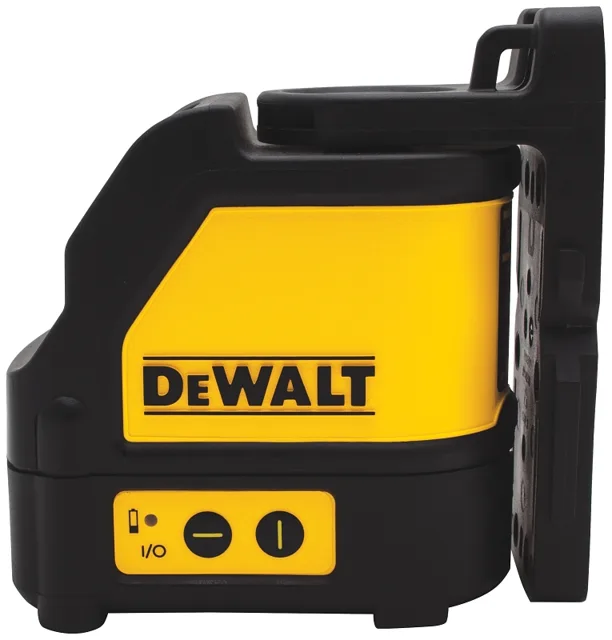
DEWALT DW088CG Laser Level Review
We may earn a commission from some links on this page.
If you want a laser level that lays out a horizontal and a vertical line at once, the DEWALT DW088CG is built for that job. It is a green-beam cross-line laser level, the kind that throws a bright line across a wall for hanging cabinets, tiling or setting out studs, and it is designed to level itself once you set it down. This review goes through what the tool is for, how the green beam differs from a red one, where the design helps, and where it asks more of you. One thing to know first: the DW088CG projects a cross, so it marks one level line and one plumb line rather than wrapping a line right round a room.
Key Takeaways
- The DW088CG is a green-beam cross-line laser level that marks one horizontal and one vertical line.
- A green beam is easier to see than a red one in a lit room, which is why green models usually cost more.
- The tool levels itself once it is set on a steady surface, and it lets you know when it is tilted too far to do so.
- It is a two-line level: for a full room layout you want a three-line or a rotating model.
- A tripod or a stable mounting point matters as much as the tool itself.
Green Beam Visibility
The reason to choose this model over DEWALT’s red two-line level is the colour of the line. Green sits higher in the visible spectrum than red, so the same laser reads brighter to the eye, which matters most in a room with daylight coming in or with work lights on. That is the whole point of a green cross-line level: you spend less time squinting along a faint line and more time working to it.
The trade-off is cost and power. Green laser diodes are dearer to make, and the brighter beam draws more from the batteries. That is why the same DEWALT body in red sells for less, and why a green level is worth the extra only if you regularly work in bright rooms.
Self-Levelling Setup
A cross-line level saves its time at the start of a job. Set the tool on a steady surface, switch it on, and a pendulum inside the housing swings the lines to level. Within its tilt range it does this on its own, so you are not adjusting a bubble vial by hand for every mark. Tools of this type warn you when they are tilted beyond that range, usually by flashing or cutting the beam, which tells you to move the tool rather than trust the line.
The flip side is that self-levelling only works as well as the surface under the tool. On a wobbly table, a stack of offcuts or an uneven floor, the level will either refuse to settle or drift as the surface moves. A tripod fixes both problems and makes the height repeatable between setups. Plan on one if you are doing more than a single afternoon’s work.
Detailed Features
The DW088CG keeps the feature set simple, which is part of its appeal. It is a two-line cross-line level rather than a three-plane or rotating tool, so everything it does is aimed at marking a level line and a plumb line accurately from one position.
Here’s a quick overview:
| Feature | Benefit | Application |
|---|---|---|
| Green laser line | A brighter line than a red beam | Lit rooms and indoor layout |
| Horizontal and vertical lines | A level line and a plumb line from one setup | Cabinets, shelving and tiling |
| Self-levelling | The tool finds level on its own | Faster setup on a steady surface |
None of this is decoration: a two-line level with a bright beam covers most of what a home or site job needs, and the simplicity keeps the price below the multi-plane models.
Advantages and Disadvantages Overview
The case for the DW088CG is straightforward. The green beam is easy to see, the cross line covers the two directions most layout work needs, and the self-levelling means a fast, repeatable start. It is a DEWALT tool, so it belongs to a battery and accessory ecosystem many people already own, and it mounts on a standard tripod rather than needing a proprietary stand.
The limits are just as clear. It is not a 360-degree tool, so wrapping a line around a whole room means moving it and re-referencing. The green beam costs more than the red version of the same level and uses more power. And the self-levelling range is finite: on a steeply sloped floor the tool will not settle at all, and you need to shim it or move it. None of these are faults so much as the line between a two-line level and a bigger one.
Ideal for Indoor Layout Work
This is a tool for indoor layout. Hanging a row of wall cabinets, setting out a tiled splashback, marking stud positions across a wall, lining up shelves or dropping a plumb line for a partition: all of that is a two-line job, and a bright green line makes it quicker.
You can use it outdoors in shade, and the green beam helps there, but direct sun washes out any line at distance. That is what laser receivers are for, and a receiver is the usual next purchase if the work moves outside.
Frequently Asked Questions
Does the DEWALT DW088CG Need a Tripod?
Not strictly, but a tripod is what makes the line repeatable. The tool needs a steady, level-ish surface to level itself against, and a tripod gives you that at whatever height the job needs. Propping it on a box will work for a quick mark and cost you accuracy on anything longer.
What Is the Difference Between the Green and Red Versions?
The green beam is the brighter one, and it is easier to see in a lit room. That is the extra you pay for. DEWALT’s red two-line model does the same layout work with a fainter line for less money.
Can It Lay Out a Whole Room?
Not on its own. The DW088CG projects a cross, so you get one level line and one plumb line from each position. For a full wrap you want a three-line level or a rotating laser, and you will pay more and carry more for it.
How Do I Know When It Is Out of Level?
Self-levelling tools tell you: when the tool is tilted beyond the range it can correct, the beam flashes or cuts out. If that happens, put it on a steadier surface or shim it rather than trusting the line.
Is It Suitable for Outdoor Work?
In shade, yes. In direct sun a green line is still hard to see at any real distance, so most people pair the level with a laser receiver for outdoor work. The receiver picks up the beam and gives you a reading where your eye cannot follow the line.