Garvee 6-Inch Orbital Sander Review
We may earn a commission from some links on this page.
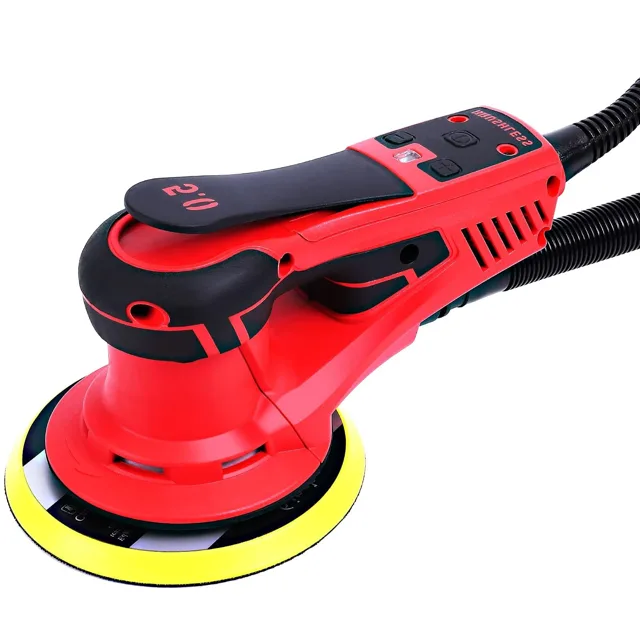
The Garvee 6-Inch Brushless Orbital Sander is a corded finishing tool built around a 350W brushless motor, a six-inch pad and a speed dial that runs from 4,000 to 10,000 RPM. It weighs 4.8 pounds, comes with a dust hose already in the box, and ships with twelve sheets of paper to get you started. That puts it in the same working class as the finishing sanders most home workshops end up buying, but with a smaller pad and a shorter reach than a long-handled wall sander. This review walks through what the tool actually offers, where it saves time and where it asks you to work around it.
Key Takeaways
- The brushless 350W motor is rated for longer life and less maintenance than a motor with carbon brushes.
- Variable speed from 4,000 to 10,000 RPM lets you drop low for levelling and run high for a fine finish.
- The six-inch pad covers more surface per pass than a five-inch sander.
- A 6.56-foot dust hose is included, but it needs a vacuum on the other end to do anything.
- At 4.8 pounds with a 9.8-foot cord, it is light enough for overhead work but still tied to an outlet.
Motor, Pad and Speed Range
The core of the tool is the brushless motor. Garvee rates it at 350W and pairs it with an active cooling system, which matters because sanding is a long, hot job and a motor that holds its temperature keeps its speed steadier as the work goes on. Brushless motors also skip the carbon brushes that wear out on a conventional motor, so there is less to replace over the life of the tool.
The pad measures six inches across. That extra inch over a five-inch sander means fewer passes across a cabinet door or a joint compound patch, and it is the main reason people move up to a six-inch machine for larger flat work. The speed dial covers 4,000 to 10,000 RPM, so the same tool can strip a finish at the low end and polish it out at the high end without changing machines.
Dust Collection and the Hose
Garvee includes a 6.56-foot dust hose with the sander, and the housing has a port to take it. On its own the hose only moves dust from the pad to the end of the hose, so it only does its job once you connect the other end to a vacuum. A small wet/dry vacuum is the usual answer, and something like the Shop-Vac 6-gallon wet/dry vacuum fits the job: it holds enough dust for a room's worth of sanding and takes the fine powder out of the air instead of letting it settle on everything you own.
Even with a vacuum running, a sander throws dust past the pad on edges and overhead work. A half-mask respirator rated P100, such as the Safety Works P100 respirator, is cheap insurance for your lungs while you work, and it is worth wearing on any job where you are sanding joint compound or old paint.
What It Means for Drywall Repairs
A six-inch random orbital sander is a good tool for the repair side of drywall work. Patches, filled screw heads and feathered joints all need flattening, and the orbital action cuts them back without the gouges a plain rotary sander leaves behind. Run it at the lower end of the speed range with a fine grit and it will take down a proud patch without digging into the paper face around it.
What it will not do is replace a long-handled drywall sander for a whole room. A pole sander keeps your feet on the floor and your arms out of the dust while you cover a ceiling, and this tool puts you on a ladder with your arms overhead. If most of your sanding is on walls and ceilings rather than on a bench, a professional drywall-finishing random orbital sander such as the Mirka Deros random orbital sander is the tool built for that job, at a professional price.
Detailed Features
The spec sheet is short and specific, which is a good sign on any corded tool. The numbers below are the ones Garvee publishes for the sander.
| Feature | What It Means |
|---|---|
| 350W brushless motor | Longer motor life with no brushes to change |
| 4,000 to 10,000 RPM variable speed | Low speed for levelling, high speed for finishing |
| 6-inch sanding pad | Wider coverage per pass than a five-inch sander |
| 6.56-foot dust hose | Connects the pad housing to a shop vacuum |
| 4.8 lb weight and 9.8-foot cord | Light enough to hold overhead, long enough to reach most rooms |
| Twelve sandpaper sheets included | Enough paper to start work out of the box |
Advantages and Disadvantages
The sander's strengths are all about the work it was built for: flat panels, repairs and finishing. Its limits come from the same design, because a compact hand-held tool cannot also be a long-reach wall sander.
| Advantages | Disadvantages |
|---|---|
| Brushless motor with cooling | Needs a vacuum for the dust hose to work |
| Wide 4,000 to 10,000 RPM range | No long handle for walls and ceilings |
| Six-inch pad for faster coverage | Corded, so it needs an outlet or an extension cord |
| Light 4.8 lb body | Only twelve sheets of paper in the box |
None of those drawbacks is a fault in the tool; they are the trade-offs of a compact sander at this size. The vacuum requirement is the one worth planning for before the first job, because without it the dust port is decoration.
Frequently Asked Questions
What size sanding discs does the Garvee take?
It uses a six-inch pad, so six-inch sanding discs and sheets are the correct size. A pack of six-inch paper in a couple of grits covers everything from levelling a patch to a final pass before paint.
Does it come with sandpaper?
Yes. The box includes four purple sheets and eight red sheets, which is enough to try the sander on a small job. Once those are used up, standard six-inch paper in the grit you need is widely available.
Can I hook it up to a shop vacuum?
The 6.56-foot dust hose comes with the sander and connects the pad housing to a vacuum. Check the inlet size on your vacuum before you start, because a hose end that does not fit will need an adapter.
Can I use it to sand drywall?
For patches, filled screw heads and small repairs, yes. Work at a low speed with a fine grit so the pad does not cut through the paper face of the drywall. For sanding whole walls and ceilings, a long-handled drywall sander is faster and easier on your arms.
Is it heavy to hold overhead?
At 4.8 pounds it is light for a six-inch sander, which helps on ceilings and high walls. The cord is 9.8 feet, so plan on an extension cord for anything above a standard room height.