
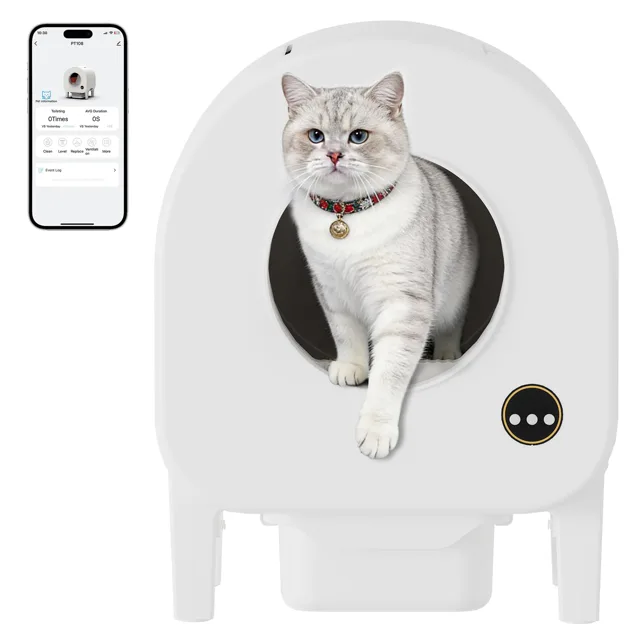
Garvee Self Cleaning Litter Box Review
We may earn a commission from some links on this page.
The Garvee Self-Cleaning Cat Litter Box is a rotating-drum box: a 68-litre litter drum turns to sift the clumps into a sealed bin, and infrared sensors stop the cycle when a cat steps in. It connects over 2.4GHz Wi-Fi to a phone app for scheduling and alerts, and the maker rates the motor under 45 decibels. The drum is detachable for cleaning and the unit works with clumping clay or crystal litter. Whether that suits your household depends on how many cats you have and how often you want to empty a bin rather than scoop a tray.
Key Takeaways
- Infrared motion sensors pause the cycle the moment a cat enters the drum.
- A 68-litre drum and 15-litre sealed waste bin, which the maker says can hold waste for up to 15 days.
- App control over 2.4GHz Wi-Fi covers cleaning schedules, litter-use tracking and full-bin alerts.
- A sealed waste compartment, ventilation fan and deodorizing function work on odour.
- The motor is rated under 45 decibels, and the drum lifts out for cleaning.
Safety Sensors Pause the Cycle
The safety design is the part to check first on any automatic box. Garvee uses infrared motion sensors that detect a cat inside the drum and stop the cleaning cycle until the cat leaves. That matters because a rotating drum has to turn a full circle to sift, and a cat that enters mid-cycle is the obvious risk.
Sensor-paused cleaning also means the box gives up its cycle rather than completing it on a timer. In a busy household the box may wait through several visits before it finishes a rotation, which is the trade-off the design accepts. The maker lists this sensor behaviour as the main safety feature of the box, and the same sensors are what trigger the app's activity information.
Capacity Suits a Multi-Cat Home
The drum holds 68 litres of litter, and sifted waste drops into a 15-litre bin inside the base. Garvee says that bin can hold waste for up to 15 days, which is the reason the box is aimed at homes with more than one cat rather than at a single-cat flat where a small tray would do.
Capacity cuts both ways. A deep drum means litter sits further from the door and the box can run longer between full changes, but it also means more litter to buy and a heavier drum to lift when the time comes. The drum is detachable, so cleaning is a matter of taking it out and washing it rather than reaching into a fixed shell. Garvee lists clumping clay and crystal litter as the compatible types, and those are also the litters a sifting drum can handle without the clumps breaking apart as it turns.
App Control Over Wi-Fi
The app connection runs on 2.4GHz Wi-Fi. From the phone you can set cleaning cycles, watch how much the cat is using the box and get an alert when the waste bin is full. Those three jobs cover most of what an automatic box needs a screen for, and they mean the box does not have to sit next to a router band it cannot use.
Two things are worth knowing before you count on the app. The 2.4GHz band is the one most smart-home devices use, so the box is joining a crowded frequency rather than the faster 5GHz band. And the app is a convenience, not a requirement: the box still senses a cat and runs its cycle without a phone nearby. The app is how you change the schedule and how the box tells you the bin needs emptying.
Detailed Features
The feature set is built around the drum, the bin and the phone. Here is how the main parts break down:
| Feature | What it means in use |
|---|---|
| Infrared sensors | Cleaning pauses while a cat is inside |
| 68L drum | Room for multi-cat use between changes |
| 15L sealed waste bin | Waste is kept out of sight and smell |
| 2.4GHz Wi-Fi app | Schedules, usage tracking and bin alerts |
| Detachable drum | Lifts out for washing |
The maker's product page rates the box 4.9 out of 5 from 21 reviews, and lists it with free shipping from a US warehouse.
Advantages and Disadvantages Overview
The case for the box is mostly about time and smell. An automatic cycle means no daily scooping, the sealed bin keeps waste out of the air, and the app tells you when the bin is full rather than leaving you to discover it. For a household with two or three cats, that adds up to fewer chores and less odour between changes.
The case against it is upkeep and dependence. A drum box still needs its litter topped up, its bin emptied and its drum washed, and those jobs are less frequent but not smaller than scooping a tray. The box also needs power and a 2.4GHz Wi-Fi signal, so a power cut or a router change interrupts the app side of it.
- Sensor-paused cleaning keeps a cat out of a moving drum.
- A large drum and sealed bin stretch the gap between full changes.
- App scheduling and bin alerts remove guesswork.
- Quiet motor and sealed waste compartment limit noise and odour.
- Needs power, Wi-Fi and regular drum washing.
Quiet Operation and Odor Control
The motor is rated under 45 decibels, which sits around the level of a quiet conversation. That figure is the maker's, and it matters most at night, when a box cycling in a hallway or bathroom is more noticeable than one running while the house is awake.
Odour control comes from three parts working together: the sealed waste compartment, a ventilation fan and a deodorizing function. Waste drops into a closed bin rather than sitting open in the drum, the fan moves air through the base, and the deodorizing element works on what the fan passes. None of it replaces changing the litter, but it does mean the box is not announcing itself from another room between changes.
Who It Suits
This box suits a household with more than one cat and a spare power socket near where the litter tray used to stand. The capacity and the sealed bin are the reasons to choose it, and the sensor pause is the reason to trust it around a curious cat. It also suits anyone who wants the box's status on a phone rather than by inspection.
It suits a single-cat home less. A 68-litre drum is more litter and more box than one cat needs, and a smaller automatic box or a plain tray does the same job with less to wash. It also asks for a 2.4GHz network and a habit of checking the app, so a household that would rather not connect a litter box to Wi-Fi is better served by a manual one.
Frequently Asked Questions
How does the box keep a cat safe during a cycle?
Infrared motion sensors detect a cat inside the drum and pause the cleaning cycle until the cat leaves. Garvee lists this sensor pause as the box's main safety feature, and it is the reason the box waits rather than finishing a rotation on a timer.
What litter can go in the Garvee box?
The maker lists clumping clay and crystal litter as compatible types. Those are the litters a sifting drum can separate into clumps, and the drum is detachable so the litter can be changed out and the drum washed.
Does the box need Wi-Fi to work?
It needs 2.4GHz Wi-Fi for the app: scheduling, usage tracking and the full-bin alert. The sensors and the cleaning cycle work on their own, so the box still runs if the phone is not nearby, but the app is how you change the schedule.
How often does the waste bin need emptying?
Garvee says the 15-litre sealed bin can hold waste for up to 15 days, and the app sends an alert when it is full. The real interval depends on how many cats use the box, so treat the figure as the maker's estimate rather than a promise.
How loud is the cleaning cycle?
The maker rates the motor under 45 decibels, around the level of a quiet conversation. That is the maker's figure; the noise in a room also depends on the surface the box stands on.