

As an Amazon Associate, this website earns from qualifying purchases.
To keep kitchen drawers tidy, it’s best to start with essential utensils only, like spatulas, ladles, and a few good forks and knives, avoiding duplicates. Using adjustable dividers helps customize space, while properly sized containers keep items neat. Group daily tools at the front for easy access and store rarely-used gadgets behind. Labels and regular decluttering maintain order, and flexible organizers adapt as needs evolve. If these tips sound helpful, there’s plenty more to discover for a clutter-free kitchen.
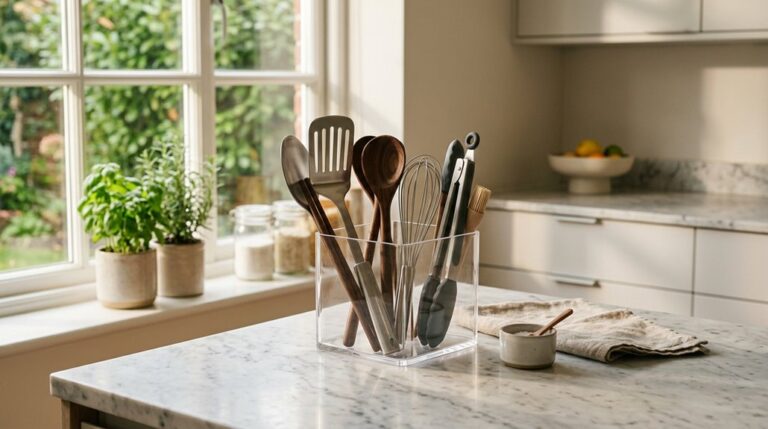
1. Identify Your Essential Utensils and Cut Duplicates

How does one determine which utensils are truly essential for their kitchen? It starts with understanding that essential utensils are those used regularly for cooking, food prep, and baking. The goal is to keep only what’s necessary, avoiding clutter. Duplicates should be limited—perhaps only two serving spoons or forks for multiple side dishes or daily use—so space isn’t wasted.
For example, if eggs are cooked daily, having an extra spatula makes sense, but avoid multiple specialized tools that perform just one task. Focus on multi-use tools that can handle various jobs, like a versatile spatula or a sturdy whisk. These choices help create a streamlined, functional drawer filled with core utensils, making cooking smoother and more enjoyable without unnecessary clutter.
2. Use Adjustable Dividers to Maximize Drawer Space

Ever wondered how to keep kitchen drawers neat and well-organized? Adjustable dividers are a game-changer for utensil storage. These versatile drawer organizers let you customize each section, fitting spatulas, ladles, or whisks perfectly, which reduces wasted space and keeps everything in place. They’re easy to reconfigure, so as your collection of utensils grows or changes, your drawer stays tidy. Additionally, using material-specific finishes like matte black or brushed nickel can help hide fingerprints and scratches, maintaining a cleaner appearance over time. The real benefit is long-term organization, since these dividers can be easily adjusted or repositioned to suit your evolving kitchen needs.
3. Select the Right Container Sizes for Your Items

Choosing the right container sizes for kitchen utensils is a key step in keeping drawers organized and functional. Properly sized containers help with kitchen cabinet organization, especially when managing big utensil organization. Before selecting containers, measuring the drawer—ideally 32 inches wide—ensures organizers fit snugly without sliding or crowding. Using parchment paper as a template can help test container sizes for a perfect fit, preventing wasted space. Considering adjustable drawer dividers can further customize storage to accommodate different utensil sizes and shapes. Grouping similar items, like all spoons or daily utensils, keeps things tidy and easy to find, enhancing overall kitchen efficiency.
4. Create Dedicated Zones for Frequently Used Tools

Creating dedicated zones within a utensil drawer can transform chaos into order. Grouping daily-use tools—like spatulas, ladles, and whisks—together ensures quick, easy access when cooking. These items should occupy a front or central section, so they’re always within reach.
Less-frequently-used tools, such as garlic presses or grilling tools, can be tucked away in a quieter area toward the back or in a separate drawer. Using drawer inserts or bamboo dividers that match the drawer’s size helps define these zones, preventing items from sliding around and keeping everything neat. Some people find that a two-tiered setup—one row for everyday utensils and another for specialty tools—works well.
Testing the arrangement over a couple of months allows for adjustments, ensuring each zone remains practical and clutter-free.
5. Incorporate Clear Labels to Maintain Order

Have you ever struggled to find the right spatula amid a cluttered drawer? Clear labels can turn this chaos into order. They help distinguish each section, making it easier to return utensils to their proper spots. Labels can be applied to dividers, trays, or containers, clearly indicating categories like spatulas, ladles, or measuring spoons. Using durable, laminated, or laser-printed labels ensures they withstand moisture and dishwasher splashes common in kitchens. Incorporating finish quality considerations into labels, such as choosing water-resistant materials, can further extend their lifespan in a busy kitchen environment. Placing labels on the front of drawer inserts or on container edges keeps them visible without disrupting the flow of the drawer. To enhance recognition, pairing labels with a simple color-coding system—such as silverware in one color and measuring tools in another—can significantly reduce search time. This simple step keeps everything neat and easy to find.
6. Regularly Declutter and Rotate Items to Keep It Fresh

After taking steps to label and organize utensils, the next move is to keep that order fresh through regular decluttering and rotation. This means periodically removing tools not used in the past month and keeping only those needed daily. Scheduling a quick monthly audit helps identify duplicates or rarely used gadgets, which can then be removed or stored elsewhere. A simple rule can help: keep everyday utensils in a countertop organizer and less-frequent items in a dedicated drawer, reducing visual clutter.
After decluttering, it’s helpful to re-evaluate the drawer’s layout—group similar items and adjust arrangements as routines evolve. Documenting these changes, like how many items were removed or how much quicker utensils are now accessible, supports ongoing organization and keeps the drawer functional and tidy.
7. Invest in Modular and Stackable Organizers for Flexibility

Is there a better way to organize a drawer than just throwing everything in and hoping for the best? Modular and stackable organizers offer a smart solution. They allow you to create customized compartments that fit utensils of different sizes, making everything easier to find.
- Rearrange Easily: These systems support reconfiguration, so as your needs change, your drawer can adapt without new purchases.
- Maximize Space: Stacking vertically uses the full depth of the drawer, which is ideal for storing deeper utensils or tools.
- Keep Items Neat: Layered storage keeps frequently used tools at the front, while less-used items stay accessible below.
- Reduce Clutter: Adjustable dividers give each utensil a designated spot, boosting visibility and reach, and keeping everything tidy.
8. Maintain Your Organization With Routine Upkeep and Adjustments

How can one keep a kitchen drawer organized over time without constantly starting from scratch? Regular upkeep is key. After reorganizing, it’s helpful to schedule a review every one to two months to ensure everything still fits and is easy to access. Keeping a minimalist approach works well—store only daily-use utensils in the drawer, while seasonal or rare tools can go in a labeled secondary spot. Developing a habit of returning items immediately after use helps maintain order.
Every few months, reassess duplicates and remove utensils used less than once a month to prevent clutter. Tracking changes with quick notes or photos can reveal what adjustments improve accessibility. With these simple routines, a tidy drawer stays manageable, saving time and frustration in busy kitchens.