

As an Amazon Associate, this website earns from qualifying purchases.
Choosing the perfect mini sofa begins with measuring your room carefully—note the length, width, and ceiling height, then check doorways to ensure easy movement. Opt for a size under 72 inches to avoid crowding, and consider styles like low-profile or modular designs to fit your layout. Place it where it complements natural traffic flow, such as against a wall or in a corner, and use light colors or open-bottom styles to make space feel larger. If you keep exploring, you’ll uncover even smarter ways to create a cozy, functional bedroom.
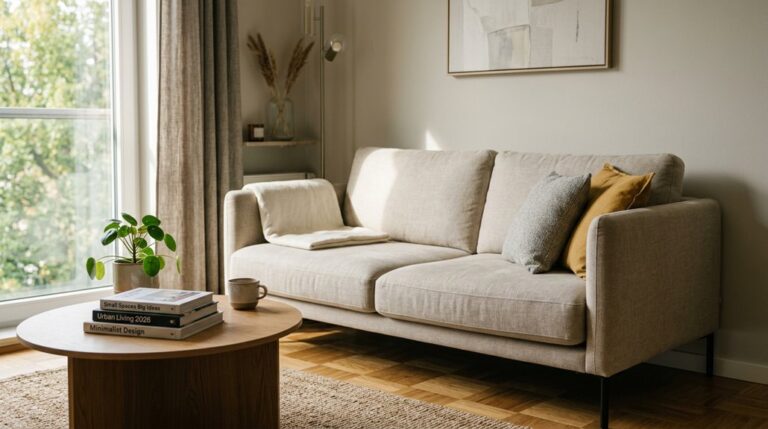
How to Measure Your Space and Choose the Right Mini Sofa Size

Have you ever wondered how to make sure a mini sofa will fit perfectly in your bedroom? The key is careful space measurement. Start by measuring the available room layout, including length, width, and ceiling height, to see how much space you have. It’s important to check doorway and hallway dimensions, too, so the sofa can be moved in easily without getting stuck. When selecting a mini sofa, consider adjustable fit options to accommodate various room sizes and layouts. For tighter bedrooms, aim for a mini sofa size under 72 inches (183 cm), or consider a loveseat, which usually measures between 130 and 180 cm. Using a simple floor plan or graph paper helps visualize placement, ensuring the sofa fits comfortably without blocking traffic flow. Prioritize compact, low-profile designs or modular options to maximize space and flexibility.
Key Features to Look for in a Small Bedroom Sofa

Choosing the right small bedroom sofa involves more than just picking a pretty piece; it’s about finding one that fits seamlessly into the space without making the room feel cramped. A compact sofa is ideal, typically under 72 inches, to prevent overcrowding. Look for a low-profile design with slim arm silhouettes, which helps keep sightlines open and maintains a sense of airiness.
Multi-functional storage features are also smart choices. They help hide clutter and maximize limited space, especially in small bedrooms. Some sofas offer hidden compartments or modular options that can double as guest beds, providing extra functionality without overwhelming the room. Prioritizing durable, easy-care fabrics ensures the sofa stays attractive and manageable in a busy bedroom setting. Additionally, selecting a sofa with sturdy construction can enhance safety and longevity in a compact environment.
How to Style Your Mini Sofa for Maximum Space and Visual Impact

Ever wonder how to make a small space feel bigger while still keeping it cozy? Effective mini sofa styling can do just that. First, choose a compact or modular mini sofa with a low profile and exposed legs; this creates a sense of openness and airiness.
Second, opt for wall-facing or corner-fitting shapes like an L-shape to maximize small-space seating without blocking doorways.
Third, incorporate light colors and layered textures—think linen throws or neutral upholstery—to reflect light and expand the sense of space. Pair the mini sofa with a matching, space-saving decor piece such as a compact coffee table or ottoman, which keeps sightlines clear and movement easy.
Additionally, selecting appropriate size and shape furniture ensures the room remains functional and visually balanced. With these tips, small-space seating becomes both functional and visually appealing, making the room feel larger and inviting.
Placement Tips to Optimize Comfort and Room Flow

What’s the best way to make a mini sofa both comfortable and easy to access? Proper placement is key to optimizing room flow and ensuring cozy seating. Placing the sofa against a wall saves space and keeps pathways clear, but floating it slightly away can make the room appear larger. Consider an L-shaped or modular design to fit into corners without crowding the space.
Aligning seating toward the focal point, such as the bed or dresser, improves usability and balance. To maximize space, pair the sofa with slim side tables or wall-mounted lighting, which frees up floor area.
Selecting Suitable Fabrics and Maintenance Tips for Small-Space Sofas

Have you ever wondered how to keep your small-space sofa looking fresh and inviting despite daily use? Choosing the right fabric can make all the difference.
- Opt for performance fabrics like water-repellent or spill-resistant upholstery, which are designed to handle messes easily.
- Consider washable covers or slipcovers that can be removed and cleaned. This is especially useful for small bedrooms with limited space for deep cleaning.
- Explore textures like velvet or chenille—velvet is both high-performance and easy to clean, while chenille offers softness without fuss.
While leather is durable and simple to wipe, it may require extra protection like a sheet or cover to prevent warmth fluctuations. These choices help maintain a fresh look with minimal effort.
Practical Considerations for Multi-Functional and Compact Sofa Designs

Considering the limited space in a bedroom, choosing a sofa that is both practical and stylish requires careful thought. Multi-functional designs like sofa beds or modular setups, such as the Aura Sofa with hidden storage or Oscar Sofa Bed, help maximize versatility.
Opt for sofas with compact dimensions—under 72 inches or around 210 cm—to fit comfortably. Low-profile, slim, or modular pieces can be reconfigured to suit tight spaces without overwhelming the room. Prioritize furniture with exposed legs or open bases, which create an airy feel and reduce visual bulk. Planning functional zones and maintaining clear traffic flow are essential.
| Feature | Benefit |
|---|---|
| Multi-functional | Saves space, adds versatility |
| Compact dimensions | Fits tight spaces without crowding |
| Modular design | Customizable, adaptable to needs |