

As an Amazon Associate, this website earns from qualifying purchases.
To create a balanced neutral and black living room, start with a strong focal point like oversized art or a bold statement piece to draw attention. Arrange furniture symmetrically or with pleasant asymmetry, and layer lighting to add warmth. Use textures such as woven textiles and matte finishes to soften contrasts. Repeat key colors and textures across the space for harmony, and place artwork or architectural details at varying heights to create visual rhythm. Keep exploring for more ways to perfect this elegant look.
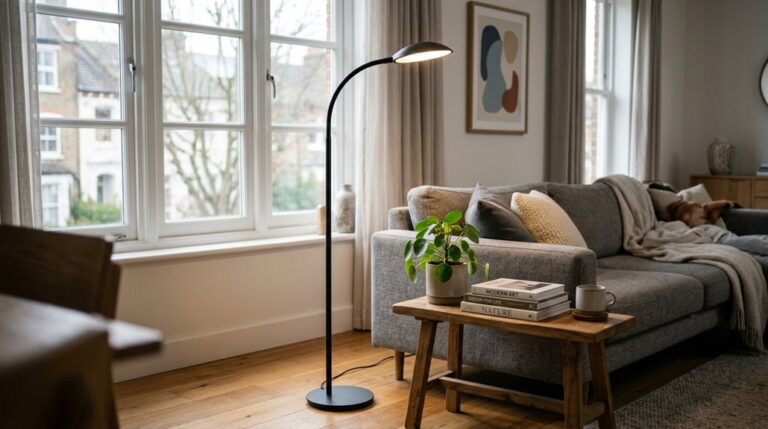
Establish a Clear Focal Point to Anchor Your Design

Have you ever walked into a room and immediately felt drawn to a single piece of art or an eye-catching feature? That’s the power of establishing a clear focal point. It acts as the anchor for your design, guiding the eye and creating a sense of balance. In a neutral palette room, choosing a large or visually dominant element, like an oversized art piece or a custom coffee table, sets the tone.
Once selected, arrange other furniture and accessories around it to support its prominence. Use scale and placement to reinforce its importance, such as centering it on a main wall or above a fireplace. To keep the room cohesive, balance the focal point with lighter textures and neutral walls, avoiding clutter that could compete for attention. Incorporating design principles like balance and harmony further enhances the overall sense of stability and visual appeal.
Create Balance With Symmetry and Asymmetry Techniques

Would you believe that achieving visual harmony in a neutral living room often comes down to balancing symmetry and asymmetry? Symmetry involves placing identical items on opposite sides, like matching lamps or chairs, creating a sense of stability. In contrast, asymmetry achieves balance through different shapes with similar visual weight, adding contrast and visual interest. Incorporating finishes like matte black or brushed nickel in your decor can enhance the cohesiveness and durability of your design choices. For example, a large sofa can be paired with smaller, weighted elements like a side table or lamp, maintaining harmony even when not perfectly symmetrical. Gallery walls or picture ledges, with artwork arranged in duos or trios, can mimic symmetry without rigidity. Repeating color accents or textures across paired elements enhances cohesion. Using both techniques—matched pairs and varied shapes—keeps the space lively yet balanced, making the room feel inviting and thoughtfully designed.
Develop a Cohesive Neutral and Black Color Scheme

Is it possible to create a living room that feels both stylish and unified using a neutral and black color scheme? Absolutely. Starting with a neutral base, like white or charcoal, sets a sophisticated backdrop that enhances light and creates contrast with bold black accents.
To develop a cohesive palette, draw colors from your rug, pillows, and artwork, ensuring each piece complements the others rather than clashing.
Use black in smaller doses—think pillows, picture frames, or lamps—paired with metals and light woods to keep the space feeling balanced rather than heavy.
Incorporating subtle textures, such as woven textiles or matte surfaces, adds depth.
Repeating key color elements across the room and adjacent areas creates visual continuity, making the entire space feel harmonious and thoughtfully designed.
Incorporate Artwork and Architectural Details for Visual Interest

Considering how artwork and architectural details can add depth to a neutral and black living room, they become essential tools for creating visual interest. Oversized artwork or a gallery wall with a cohesive color scheme can serve as a stunning focal point against neutral walls and black accents.
Architectural features like black trims, dark fireplace surrounds, or layered molding in charcoal or black finish echo the room’s palette, adding texture without overwhelming space. To keep the room feeling balanced, place art and architectural elements at varying heights—floor-based, eye-level, and tall pieces—creating a lively visual rhythm. Integrating statement lighting fixtures, especially in black or metallic tones, highlights these features and draws the eye.
This approach enhances a neutral living room with black accents, making it feel inviting and thoughtfully designed.
| Artwork & Architectural Details | Placement & Effect |
|---|---|
| Oversized art or gallery wall | Acts as visual anchor against neutral walls |
| Layered molding or trim | Adds texture, echoes black and charcoal accents |
| Varying heights of elements | Creates dynamic visual rhythm |
| Statement lighting fixtures | Highlights textures, emphasizes focal points |
Use Strategic Furniture Placement to Enhance Flow and Functionality

Strategic furniture placement can make a significant difference in how a living room feels and functions. Positioning the couch opposite the fireplace creates a natural focal point, making the space feel organized and inviting. To encourage conversation, fitting two club chairs around the coffee table forms a balanced cluster, with at least 6–8 feet of space for easy movement. An area rug helps define the space and anchors the furniture, typically measuring around 8×10 feet for a standard room.
Curtains on the windows frame the space softly and help balance the black and neutral tones. Additionally, floating a sectional away from the corner or rotating it slightly improves traffic flow and opens up views to the windows, making the room more welcoming and functional.
Layer Lighting to Soften Contrasts and Add Warmth

Have you ever noticed how harsh, contrasting lighting can make a black and white living room feel cold or uninviting? Layering different types of lighting helps soften these stark contrasts and adds warmth. By combining ambient overhead lights, task lighting near seating areas, and accent lights like wall sconces or lamps, the room feels more inviting. Using warm white LEDs (2700K–3000K) ensures cozy illumination without changing the room’s color balance. Diffused lighting from frosted shades reduces sharp shadows, making dark furniture feel softer.
Reflective surfaces such as metallic or glass elements bounce light around, creating a sense of space and brightness without glare. Finally, installing dimmer switches allows adjusting light levels easily, transforming the room from bright daytime to cozy evening ambiance.
Add Texture and Textiles to Increase Depth and Comfort

Adding texture and textiles to a black and neutral-toned living room can transform the space from flat to inviting, creating a sense of depth and comfort that’s hard to achieve with color alone. By layering at least three different textures—like matte fabrics, plush velvet, and woven jute—designers add visual interest without changing the color palette. Mixing these textures across furniture, throw blankets, pillows, rugs, and curtains prevents the room from looking dull or one-dimensional.
Using a variety of fabric weights, such as heavy upholstery, medium-weight throws, and low-pile rugs, creates tactile contrast that invites touch. Incorporating metallic or natural wood accents in textured finishes, like brushed metal or distressed wood, further enhances depth. Subtle patterns and embossing in textiles also add dimension while keeping the overall look restrained and sophisticated.
Keep Your Design Decisive and Consistent for a Harmonious Look

Why is it important to keep a living room design both decisive and consistent? When a space feels cohesive, it’s more inviting and relaxing. Consistency creates harmony, making the room look thoughtfully planned rather than chaotic. Decisiveness helps avoid visual confusion; too many competing elements can overwhelm the eye.
To achieve this, maintain a single overarching color foundation, like white walls with charcoal accents, and repeat key materials or textures throughout. Focus on a dominant focal point, supported by just two or three complementary pieces, and limit contrasting color accents. Use matching metals, wood tones, and fabrics in sets of two or three to create unity.
Investing in high-quality staples first, then layering with accessories that echo the main palette, keeps the design both balanced and elegant.
- Stick to one color palette and repeat textures
- Choose a clear focal point with supporting elements
- Use matching styling cues for harmony
- Invest in versatile, high-quality basics first