

As an Amazon Associate, this website earns from qualifying purchases.
Blending traditional elegance with contemporary design in your living room requires a keen eye for detail and a thoughtful approach. Start by embracing a neutral color palette, allowing versatile taupes, beiges, and soft grays to serve as a sophisticated backdrop. Add statement lighting fixtures and layer textures for depth. Imagine mixing antique anchors with sleek modern seating, and incorporating art that bridges both eras. Curious about how these elements harmonize? Explore further to uncover the secrets.
1. Embrace a Neutral Color Palette

A neutral color palette is your go-to foundation for harmonizing traditional and contemporary design elements in your living room. By opting for shades like taupe, beige, and soft grays, you create a versatile backdrop that complements both classic and modern aesthetics.
This palette allows you to layer textures and patterns without overwhelming the space. Consider incorporating materials such as natural wood or marble to enhance the classic contemporary living room vibe.
Neutral colors provide a sense of calm and sophistication, making it easier to introduce bold pieces elsewhere. Keep an eye on trends like muted earthy tones and soft whites, which add depth while maintaining a timeless appeal.
With this approach, you’ll effortlessly achieve a seamless blend of styles.
2. Incorporate Statement Lighting Fixtures
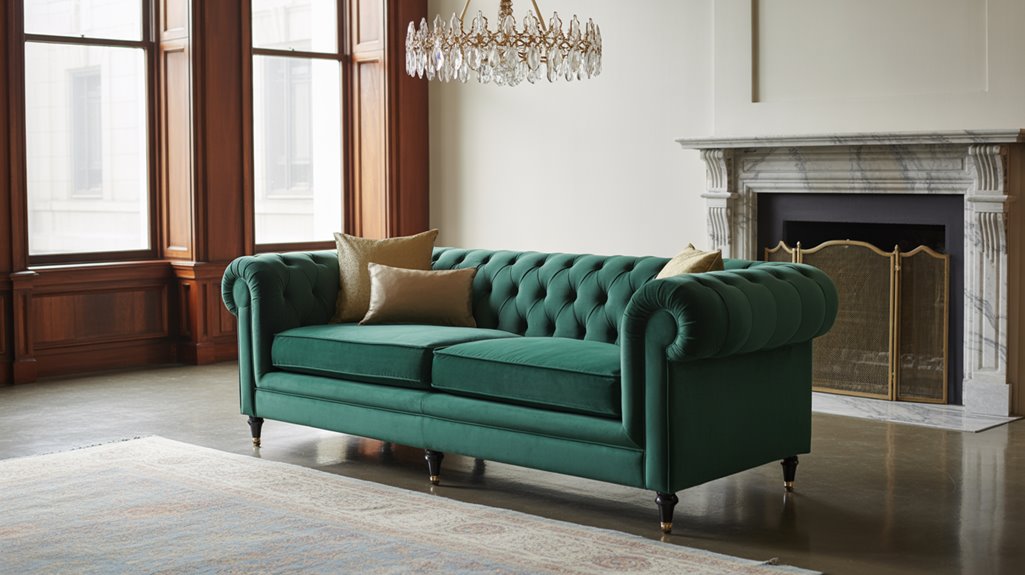
Neutral hues lay the groundwork for a harmonious blend of styles, and now it’s time to illuminate your space with statement lighting fixtures. In a modern classic living room, lighting serves as both a functional and aesthetic focal point.
Opt for chandeliers with intricate designs to evoke traditional elegance, while sleek, geometric pendant lights introduce contemporary flair. Consider materials like brass or matte black finishes to maintain a timeless yet trendy appeal. Layer lighting with floor lamps and wall sconces to create depth and dimension. Smart lighting systems can enhance mood and energy efficiency, offering both sophistication and convenience.
Remember, lighting isn’t just about illumination—it’s an art form that transforms your living room into a truly enthralling space.
3. Mix and Match Textures and Materials

Incorporating a diverse array of textures and materials can elevate your living room’s design to new heights. Start by blending plush velvet and crisp linen to create a tactile contrast that invigorates the space. These fabrics can be used on cushions or upholstery, introducing variety without overwhelming.
For your flooring, consider layering a classic Persian rug over sleek hardwood. This juxtaposition melds traditional charm with modern simplicity, enhancing your classic living room design.
Introduce metallic accents like brass or chrome. They add a touch of luxury and reflect light, amplifying the room’s brightness. For walls, use textured wallpaper or exposed brick to add depth. By thoughtfully mixing these elements, you’ll craft a space that seamlessly combines the warmth of tradition with contemporary flair.
4. Blend Antique and Modern Furniture Pieces

To achieve a harmonious blend of traditional and contemporary elements, consider integrating both antique and modern furniture pieces into your living room.
Start by selecting a statement antique piece, like a classic Chesterfield sofa or a vintage wooden coffee table. These timeless elements anchor the room with rich history and elegance.
Pair them with sleek, modern pieces—perhaps a minimalist glass side table or a contemporary armchair. This contrast creates visual interest and depth.
Balance scales and proportions carefully; a large antique armoire pairs well with a streamlined, low-profile couch.
Use complementary colors and fabrics to unify the space. Mixing classic furniture with contemporary designs not only honors history but also keeps your living room on the cutting edge of design trends.
5. Introduce Art That Bridges Both Eras

How do you seamlessly blend the past with the present in your living room decor? Art that bridges eras can be your secret weapon. In classic interior design living room settings, juxtaposing antique art with contemporary pieces creates a visual dialogue. It’s all about balance and harmony.
- Curate a Gallery Wall: Mix old-world paintings with modern abstract art for an eclectic display.
- Sculptural Contrasts: Pair a vintage bust with a sleek, minimalist sculpture to create a focal point.
- Multimedia Installations: Integrate digital art that incorporates traditional motifs.
- Layered Textures: Use textiles like tapestries or wall hangings that echo both classic and modern themes.
6. Use Architectural Details to Add Depth

While art bridges eras, architectural details can imbue your living room with a rich narrative that transcends time. Imagine intricate crown moldings gracefully crowning your ceiling, adding sophistication to your classic living room. Incorporate wainscoting or beadboard panels on walls to introduce texture and depth. These elements, once hallmark features of stately homes, are finding their way back into contemporary spaces, blending history with modernity.
Consider exposed wooden beams for a rustic touch, or a sleek mantelpiece to frame your fireplace, effortlessly marrying the past with the present. Don’t forget arched doorways, which subtly nod to classic architecture while creating an inviting flow. By integrating these details, you’re not just decorating; you’re crafting a space that tells a timeless story.
7. Layer Rugs for Visual Interest

Elevate your living room’s aesthetic by layering rugs, a technique that can transform a space from ordinary to extraordinary with ease.
In a traditional living room, this approach adds texture, color, and dimension, seamlessly blending timeless elegance with modern flair. Choose complementary patterns and textures to create a cohesive look, while paying attention to rug size and placement to guarantee balance.
- Start with a neutral base rug: A solid or subtly patterned rug sets the stage.
- Add a vibrant accent rug: Introduce bold colors or intricate designs over the base.
- Play with textures: Mix different materials like wool, silk, or jute for tactile contrast.
- Vary shapes and sizes: Experiment with layering square, rectangular, or round rugs for visual intrigue.
This method not only enhances aesthetics but also defines distinct zones within the room.