

A whole-house softener takes the calcium and magnesium out of the water at the point it enters the house, which is what keeps scale out of the kettle, the washing machine and the water heater. The four units below are the ones we can point you to right now, from the two families of softener most homes end up choosing between: salt-based units that regenerate a resin bed, and cartridge systems that are serviced by swapping a cartridge.
Our Top Water Softener Picks
| WaterBoss 36400 Grain Water Softener | 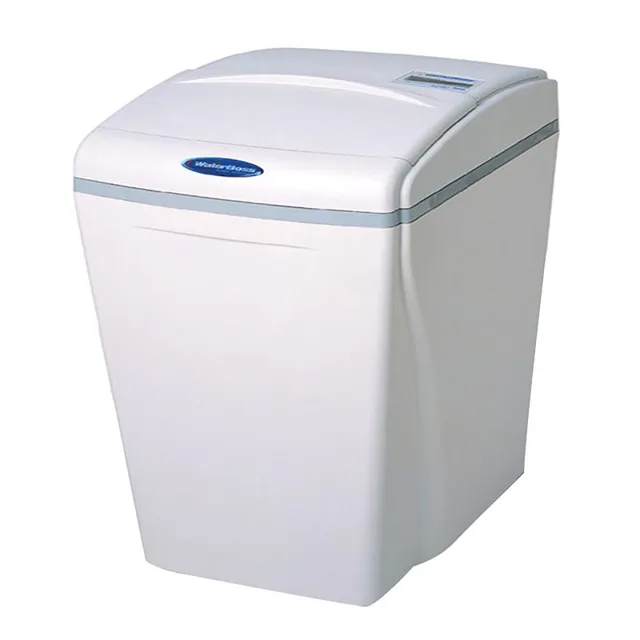 | Largest capacity | Capacity: 36,400 grains | Type: Salt-based, self-cleaning | Household: 3-4 people | Check price | Read Our Analysis |
| WaterBoss 22000 Grain Water Softener | 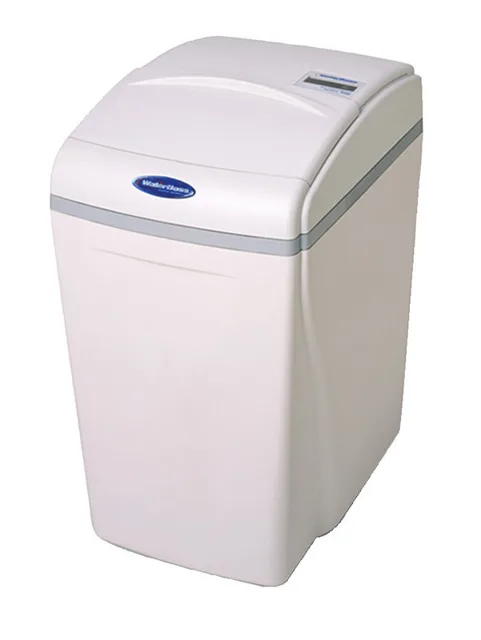 | Smaller unit | Capacity: 22,000 grains | Type: Salt-based, self-cleaning | Household: 3-4 people | Check price | Read Our Analysis |
| NuvoH2O Home Duo Water Softener System | 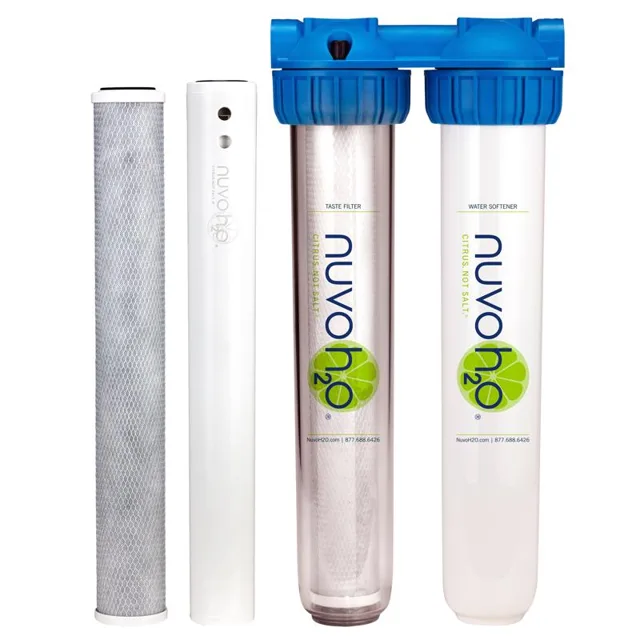 | Cartridge system | Capacity: Not listed | Type: Cartridge system | Cartridges: Sold separately | Check price | Read Our Analysis |
| NuvoH2O Manor Plus Hybrid Water Softener | 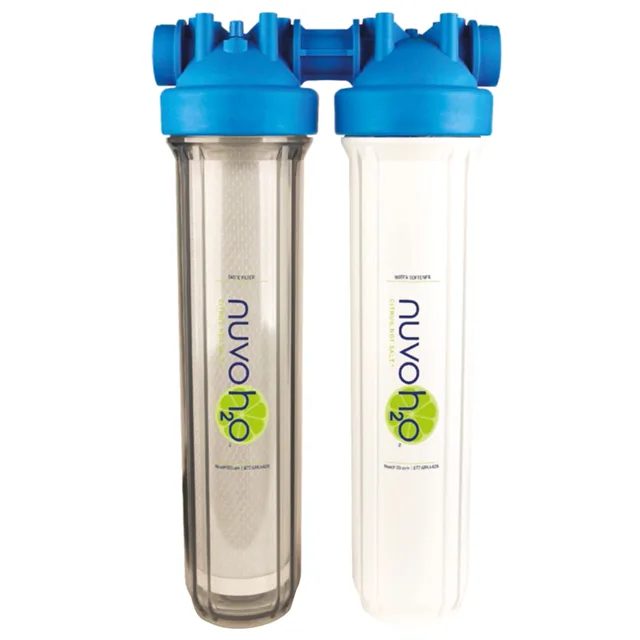 | Hybrid system | Capacity: Not listed | Type: Hybrid system | Cartridges: Sold separately | Check price | Read Our Analysis |
More Details on Our Top Picks
-
WaterBoss 36400 Grain Water Softener
The WaterBoss model 900 is the high-usage unit in the range. The maker rates it at 36,400 grains, with up to 90 grains per gallon of hardness removal, 10 ppm of ferrous iron reduction and a 160-pound salt storage capacity. A self-cleaning filter replaces the usual cartridge, so there is nothing to change out between salt fills, and the settings memory holds your programme. It is rated for households of three to four people and stands 30.5 inches high on a 15 by 19 inch footprint.
- Grain capacity:36,400
- Hardness removal:Up to 90 grains per gallon
- Iron reduction:Up to 10 ppm
- Salt storage:160 lb
- Household size:3-4 people
- Filter:Self-cleaning, no cartridges
- Footprint:30.5 H x 15 W x 19 D in
- Weight:105 lb
-
WaterBoss 22000 Grain Water Softener
The model 700 is the smaller of the two WaterBoss units, and the maker describes it as using the least salt and water it can for each regeneration. It is rated at 22,000 grains, up to 70 grains per gallon of hardness removal and 10 ppm of iron, and gives about 1,400 gallons between refills from a 120-pound salt store. It stands 25.75 inches high and 14.75 inches wide, weighs 80 pounds, and regenerates in about 18 minutes.
- Grain capacity:22,000
- Hardness removal:Up to 70 grains per gallon
- Iron reduction:Up to 10 ppm
- Output between refills:1,400 gallons
- Salt storage:120 lb
- Footprint:25.75 H x 14.75 W x 18.75 D in
- Regeneration:About 18 minutes
- Weight:80 lb
-
NuvoH2O Home Duo Water Softener System
The Home Duo is a whole-house NuvoH2O system that is serviced by fitting a replacement cartridge. The shop lists it by model number 711157 and sells the matching Home cartridge separately, but it gives no grain rating, dimensions or warranty on the page, so check the maker's own specification against your water test before you order.
- Model:711157
- Format:Whole-house, cartridge-based
- Replacement cartridge:Sold separately
-
NuvoH2O Manor Plus Hybrid Water Softener
The Manor Plus is the hybrid unit in the NuvoH2O range, listed as model DPNCB. Like the Home Duo, the shop page carries no grain capacity, dimensions or warranty, so the maker's specification sheet is the place to confirm what it will treat. It takes the Manor replacement cartridge, which is sold separately.
- Model:DPNCB
- Format:Whole-house hybrid
- Replacement cartridge:Manor cartridge, sold separately
Factors to Consider When Choosing a Water Softener
Sizing and servicing are the two decisions that matter most. Match the capacity to how many people use the water and how hard it is, then pick the servicing routine you will actually keep up with: salt and a periodic clean, or a cartridge on a schedule. The rest — footprint, pipe size, warranty — decides whether a particular model will fit the space you have.
Capacity For Household Size
Capacity is given in grains, and it is the number that decides how often the unit has to regenerate. For a household of up to six people, a unit in the 30,000 to 35,000 grain range is the usual starting point; smaller homes with one or two bathrooms can go lower, and larger homes with heavy use should go higher. The WaterBoss 900 is rated at 36,400 grains for three to four people, while the WaterBoss 22000 covers the same household size at 22,000 grains with more frequent refills. If you are between sizes, work from a water test rather than the brochure range.
Salt-Based or Cartridge Systems
The two WaterBoss units here are salt-based: they hold a bed of resin, pull the hardness minerals onto it, and then flush it with brine made from salt you add to the cabinet. A cartridge system such as the NuvoH2O Home Duo works differently: the servicing is a cartridge swap on the maker's schedule. Salt-based units suit a household that wants a fixed routine and a large reserve of capacity; cartridge systems suit someone who would rather keep the upkeep to a single part.
Salt Usage And Alerts
Salt use follows how often the unit regenerates, which in turn follows your water hardness and how much water you use. A metered control head regenerates on demand rather than on a fixed clock, which is the difference between using the salt you need and using it on a schedule that has nothing to do with your household. Watch the salt level in the cabinet and top it up before it runs low; the WaterBoss units list a 160-pound and a 120-pound salt store, so a full fill lasts a good while in a normal home.
Installation Simplicity
Both WaterBoss units connect to pipework up to 1 inch and come with an installation kit, but a softener still needs a drain for the regeneration water and a power point nearby, so the position matters as much as the fittings. The WaterBoss 22000 is the smaller of the two WaterBoss machines at 25.75 inches high, which helps in a tight utility corner; the larger model needs about 30.5 inches of height. If you are not confident cutting into the main line, a plumber is the sensible route.
Filtration Versus Softening
Softening removes hardness minerals; filtration removes chlorine taste, sediment, sand or other contaminants. They are different jobs and a softener is not a filter. The WaterBoss units do carry a self-cleaning filter that catches dirt and sediment and reduces ferrous iron, which covers light well-water debris, but if chlorine taste or a specific contaminant is your problem, test the water first and treat that separately.
Maintenance Requirements
A salt-based softener needs salt, an occasional check that the brine tank is clean, and a look at the control head settings after a power cut. The self-cleaning filter on the WaterBoss units removes the cartridge changes that some softeners need. Cartridge systems need their cartridge replaced on the maker's interval, and nothing else beyond keeping an eye on water quality. Either way, keep the manual with the unit and follow the maker's service intervals rather than inventing your own.
Warranty And Support
Warranty coverage varies widely and is the part most shoppers skip. Ask what the warranty covers — the control valve and the tank are often treated differently — and how long it runs. The shop pages for the four units here do not state a warranty, so confirm it with the seller before you order, and keep the receipt with the unit's paperwork.
Frequently Asked Questions
How Do I Size a Water Softener for My Home?
Start with a water test for hardness and iron, then multiply your daily water use by the hardness figure to get the grains you remove each day. A unit should carry enough capacity to cover several days between regenerations, which is why a three-to-four-person home usually lands in the 22,000 to 36,000 grain range.
What Is the Difference Between a Softener and a Cartridge System?
A salt-based softener trades sodium for the calcium and magnesium in the water and flushes the captured minerals away during regeneration. A cartridge system passes the water through a replaceable cartridge instead, so there is no salt to add and servicing means fitting a new cartridge when the maker's interval comes round.
Do These Units Require Professional Installation?
They can be installed by a confident DIYer, but the work involves cutting into the main water line and running a drain for the regeneration water, and local codes may require a licensed plumber. Check the maker's guidance and your local rules before deciding.
How Often Do I Need to Add Salt?
It depends on hardness, water use and how the control head is set. A metered unit regenerates when the resin is used up rather than on a fixed day, so the salt lasts longer in a light-use home. Check the cabinet every few weeks and refill before the level drops below the brine line.
What If I Have Iron in My Water?
Ferrous iron is the common dissolved kind, and the WaterBoss units here are rated for up to 10 ppm of it alongside the softening. Above that, or with bacterial iron, you need a dedicated iron filter before the softener — test the water to find out which situation you are in.