

As an Amazon Associate, this website earns from qualifying purchases.
Choosing coordinating light fixtures means focusing on creating a unified, harmonious look across your home. It’s helpful to start with a comprehensive list of needed fixtures, then pick a consistent style and finish—like brushed nickel or matte black—that flows from room to room. Find shapes and design elements that tie spaces together naturally, and layer lighting for both function and atmosphere. If you want to master these tips, further guidance is just ahead.
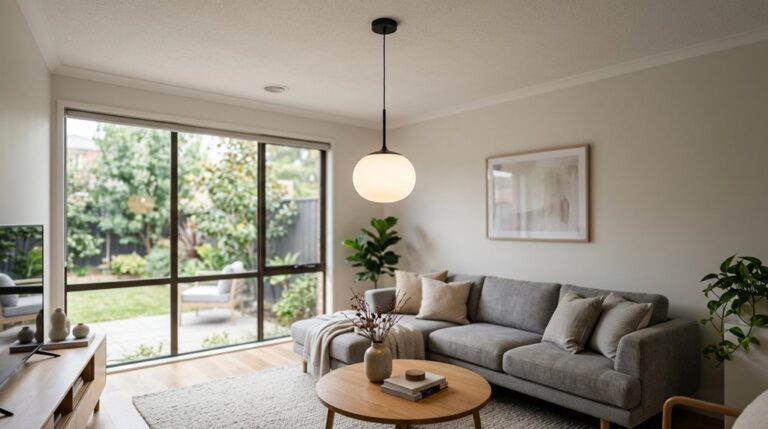
Understand Why Coordinating Light Fixtures Matters for Cohesion

Have you ever walked into a home where the lighting feels just right, as if all the fixtures belong together? That sense of harmony is what cohesion in lighting design creates. Coordinating finishes—such as brushed nickel, matte black, or antique brass—across chandeliers, pendants, and ceiling fans helps establish a unified look without needing identical fixtures. It’s about matching the design language, or the overall style and feel, of each piece. Additionally, considering the material durability and safety features of fixtures ensures longevity and safety, especially in high-moisture areas like bathrooms or kitchens.
When finishes are coordinated but not identical, they flow naturally from room to room, making the space feel connected. This approach not only enhances visual appeal but also aids in selling the home, as buyers can easily imagine a single, harmonious environment. Practical choices, like durable finishes, reinforce this flow in open-concept spaces.
Start by Making a Comprehensive List of Fixtures You Need

Starting with a clear, thorough list of the fixtures needed for each room can feel like a small step, but it’s an essential one in creating a cohesive lighting plan. It helps guarantee that the right fixture types are chosen for each space, such as flush mounts for low ceilings or sconces for accent lighting. When making this list, consider fixture placement carefully, noting where each light will go and how it fits with the room’s layout. Incorporating lighting style and finish options that match your furniture and decor can enhance the overall aesthetic. It’s also important to identify spaces with constraints, such as ceilings that require specific fixtures, and to flag areas needing electrical work or junction box adjustments. By distinguishing fixed versus flexible options early on, homeowners can better plan style, finish, and quantity, making the process smoother and more coordinated.
Choose a Consistent Style and Design Direction for Your Home

How can homeowners create a unified look for their lighting fixtures without making everything look too matchy? The key lies in establishing a consistent style and design direction for the lighting design interior. Start by choosing a main aesthetic, such as modern, rustic, or traditional, and stick with it across all fixtures. Use a unified palette of finishes—like matte black or brushed nickel—across different lighting fixtures such as pendants, chandeliers, and flush mounts. Echoing shapes and contour lines also help; matching silhouettes between fixtures like dining chandeliers and island pendants reinforce cohesion. Incorporating material consistency, such as natural rattan, wood, or metal finishes, further unifies the overall look. A practical tip is to assess each room individually, determining which spaces can share a style and which may need small variations. This approach creates a harmonious rhythm without sacrificing personality.
Select a Unified Finish and Metal Tone for All Fixtures

Choosing a unified finish and metal tone is like setting the foundation for a cohesive look in home lighting. It helps create a visual rhythm that ties different fixtures together smoothly. Picking a single finish—such as matte black, brushed nickel, or polished brass—makes the overall space feel harmonious.
When mixing finishes, it’s important to be mindful of sheen differences. For instance, avoid pairing shiny chrome with matte black in the same sightline, as it can look mismatched. Using similar metal tones across various fixture types—pendants, sconces, or chandeliers—unifies the design without needing every piece to match exactly.
Differentiating finishes clearly, like black versus antique bronze, prevents confusion and adds intentional contrast. Applying a consistent finish across rooms supports flow and visual connection throughout the home.
Find Fixtures With Similar Shapes and Design Elements

Have you ever noticed how some rooms just feel like they belong together, even if they’re decorated differently? The secret often lies in their lighting fixtures. Choosing fixtures with similar shapes or design elements creates visual harmony. For example, pairing a dining chandelier with island pendants that share the same overall shape helps tie the space together.
Matching the lines and curves of flush mounts, pendants, and chandeliers by design language reinforces this connection. Using common details, like glass shades or shared contours, creates a visual link between different fixture types. The goal is to echo design elements across rooms, so fixtures don’t have to be identical but still feel part of a unified look. This approach subtly guides the eye and creates a cohesive, well-thought-out home.
Develop Whole-Home Lighting Plans Based on Finishes and Styles

Building a cohesive lighting plan throughout the home starts with selecting a consistent finish and style that can serve as a unifying thread across different spaces. For example, choosing a brass finish creates warmth and elegance, while black adds a modern, bold touch. Developing three starter plans—one in brass, one in black, and another in polished nickel—helps guide fixture choices across rooms and open areas. These plans should include a variety of fixtures: flush mounts, chandeliers, pendants, wall sconces, and vanity lights—so each space can be wired to match.
They act as flexible templates, allowing some style variation but maintaining finish consistency. By filling gaps with fixtures sharing similar lines and silhouettes, the home’s look flows seamlessly, respecting ceiling heights and electrical needs while supporting a unified aesthetic.
Layer Your Lighting for Functionality and Atmosphere

Have you ever wondered why some rooms feel just right, no matter what activity you’re doing? The secret lies in layering lighting for both function and mood. By combining ambient light (the general glow), task lighting (for reading or cooking), and accent lighting (highlighting art or architectural features), spaces become more inviting and practical.
To keep things balanced, establish a single focal point fixture in each area—like a chandelier or pendant—to avoid visual clutter. Using dimmers allows flexibility, adjusting brightness for different times or activities. Outdoor areas also benefit from weatherproof fixtures in this layered approach. And, importantly, planning sightlines ensures the layered fixtures in adjacent rooms work together, creating a flowing, cohesive look.
| Layer Type | Purpose |
|---|---|
| Ambient | Overall light for the room |
| Task | Specific activities like reading |
| Accent | Highlight artwork or features |
| Focal Point | Main fixture to anchor space |
| Adjustable | Dimmers for mood and function |
Avoid Common Pitfalls When Coordinating Fixtures for a Harmonious Look

When coordinating light fixtures throughout a home, it’s easy to fall into the trap of creating visual chaos. Mixing too many different elements—like multiple styles, colors, or finishes—can make spaces look disorganized rather than cohesive. To avoid this, limit yourself to two or three distinct fixture types per room, and ensure there’s a unifying factor, such as a common finish or style, to tie everything together.
It’s also important to consider sightlines and proximity, especially in open layouts. For example, pendant lights hanging over a dining table should coordinate subtly with fixtures in adjacent areas.
Finally, don’t rely solely on a single design family; blending styles carefully can add personal charm without sacrificing harmony.