
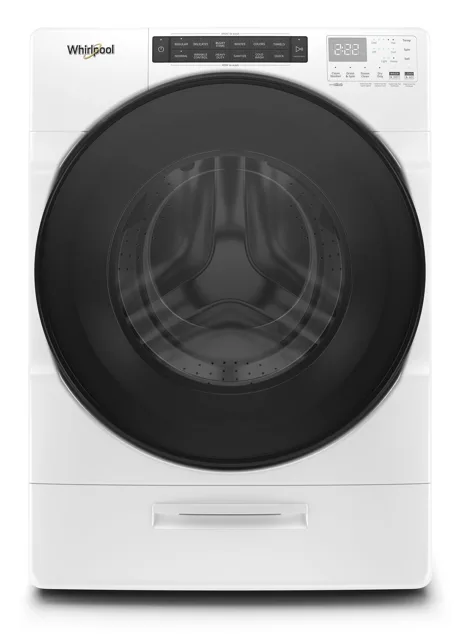
Whirlpool WFC682CLW Review
We may earn a commission from some links on this page.
The Whirlpool WFC682CLW is a ventless all-in-one washer-dryer in white with a 4.5 cubic foot drum, sold by Whirlpool. It washes and dries in the same drum, so a load goes in dirty and comes out ready to fold without being carried across the room, and because it dries with a heat pump there is no duct to run through a wall. That combination is what makes this class of machine useful in flats, closets and basements. This review covers how the machine works, where it gives ground, and what to check before you buy it.
In This Review
- What a Ventless Combo Does
- Drying Performance and Room Conditions
- Maintenance and Everyday Use
- Detailed Features
- Advantages and Disadvantages
- Who It Suits
- Frequently Asked Questions
Key Takeaways
- One drum washes and dries the load, so nothing is moved between machines.
- A ventless heat-pump dryer needs no outside duct, but it does need a drain, a cold water supply and power.
- Drying takes longer than a vented dryer or a separate pair of machines.
- Room temperature and humidity affect how quickly the condenser can pull moisture out of the load.
- The lint filter and the condenser need regular cleaning to keep drying times from creeping up.
What a Ventless Combo Does
A combo like the WFC682CLW runs a wash cycle and then a dry cycle in the same drum. You load it once, choose a programme that ends with drying, and come back to finished laundry. In a flat or a closet where a washer and a separate dryer would not both fit, that is the whole point: one footprint, one set of connections.
The drying half is a heat pump with a condenser. Instead of pushing hot, damp air outside through a duct, the machine cools the damp air so the water condenses out, then drains or collects it. That is why no vent is needed and why the machine can sit against an outside wall or in an internal closet. It also means the drum does not get as hot as a vented dryer, which is gentler on fabric but slower.
Two habits get the best out of this layout. First, dry smaller loads than you would wash: a drum packed tight with wet washing has no room for the air to move, and the cycle runs long without drying evenly. Second, plan around the clock rather than the minute. A wash-and-dry run on a heat-pump combo is a long programme, so the sensible pattern is to start it in the evening and unload in the morning.
Drying Performance and Room Conditions
A condenser dryer works with the air in the room, so the room matters. In a cold space the heat pump has less to work with and drying slows down. In a humid space, or in a small closed closet, the moisture the machine gives off has nowhere to go and the load takes longer. A little ventilation around the cabinet and a door left slightly open during the dry cycle both help.
In a damp basement, a dehumidifier in the same room is a practical addition, and it also protects the machine itself from standing humidity. In summer the heat pump adds a little warmth to the room rather than dumping heat outside, which is worth knowing if the laundry cupboard is next to a bedroom.
Expect the dry cycle to be the slow part of the programme. Where a vented dryer finishes a load in well under an hour, a heat-pump combo often needs considerably longer, and a heavy load of towels longer still. If your household runs several loads a day, that pace is the main reason to look at a separate washer and dryer instead.
Maintenance and Everyday Use
A ventless combo asks for more routine attention than a vented dryer, because the lint and the condenser are inside the machine. Empty the lint filter every few loads rather than every few weeks; a matted filter is the most common cause of a slow dry. Clean the condenser area on the schedule the manual gives, usually monthly, and wipe the rubber door seal so mould does not take hold in the fold.
Use a high-efficiency detergent, because a front-load drum uses far less water and a standard detergent will foam. Leave the door ajar between uses so the drum dries out. In a hard-water area, run a descaling cycle when the machine asks for it. None of this is difficult, but it is the difference between a combo that keeps its drying times and one that slowly stops finishing loads.
Detailed Features
| Feature | What It Means | What to Consider |
|---|---|---|
| Ventless heat-pump drying | Moisture is condensed out of the air instead of being ducted outside | Needs a drain and room air; slower than a vented dryer |
| All-in-one drum | The same drum washes and then dries the load | Keep dry loads smaller than wash loads |
| 4.5 cu. ft. drum | Household wash capacity rather than a compact one | Bulky items still need room to tumble |
| White finish | Matches standard laundry appliances | Wipe the cabinet and control panel regularly |
| Front-load door | Loading and unloading from the front | Leave the door ajar between uses to air the drum |
Advantages and Disadvantages Overview
| Advantages | Disadvantages |
|---|---|
| No outside vent to install or clean | Drying takes longer than a vented machine |
| One machine and one footprint | Dry loads must be smaller than wash loads |
| A load goes in dirty and comes out dry | Filter and condenser need regular cleaning |
| Fits a closet or flat that has a drain | Drying performance depends on the room |
Who It Suits
The WFC682CLW suits a flat, a small house or a basement laundry corner where there is no duct and no room for two machines. It also suits anyone who would rather load once and walk away than move wet washing from a washer to a dryer. It is a good fit for one or two people, or a family that spreads laundry across the week.
It is a poorer fit for a busy household running several loads a day, for anyone who needs a load finished in under an hour, and for a room that stays cold or damp all year, where the condenser will always be working against the conditions.
Frequently Asked Questions
Does the Whirlpool WFC682CLW Need a Vent?
No. It dries with a heat pump and condenser, so the moisture is collected inside the machine and drained or emptied rather than sent outside through a duct. It still needs a cold water supply, a drain and power.
Why Does Drying Take So Long?
A heat-pump condenser dries at a lower temperature than a vented dryer, so the cycle runs longer. Loading the drum loosely and keeping the filter and condenser clean are the two things that shorten it most.
Can I Wash and Dry a Full Drum?
Wash a full drum, then split the drying. A drum that is packed with wet washing has no room for air to circulate, so a full wash load usually needs to come out in two dry batches to finish properly.
How Often Should the Filter Be Cleaned?
Every few loads. The lint filter sits in the airflow, and once it mats over, drying times climb and the load comes out damp. The condenser needs cleaning on the schedule in the manual, typically once a month.
What Detergent Should I Use?
A high-efficiency detergent, because the drum uses little water. Standard detergent foams too much and can leave residue in the drum and the condenser.